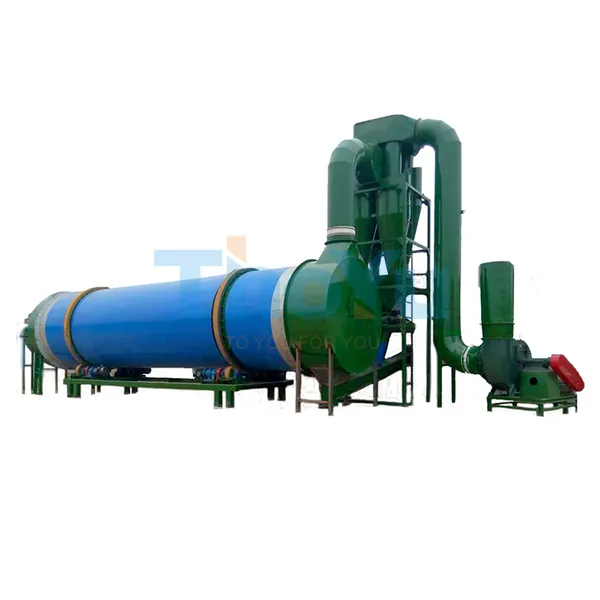
In industrial wood chip drying, energy consumption remains a critical operational challenge. Zhengzhou Tuoyu Electromechanical Equipment Co., Ltd. has pioneered an innovative rotary drum dryer incorporating advanced heat exchange technologies and optimized airflow systems, significantly improving drying efficiency while prioritizing energy savings and environmental compliance. This article delves into the key technical features — including the internal fin design, direct airflow system, and environmentally friendly components — providing actionable insights for production engineers, R&D specialists, and energy management planners seeking to optimize their drying processes.
The core innovation centers on the integration of an internal finned structure within the rotary drum. These fins, crafted from high-conductivity steel alloys, enlarge the surface area available for heat exchange by approximately 40%, elevating the thermal contact between hot gases and wood chips. This design achieves a remarkable energy utilization improvement, reducing fuel consumption by 30% to 50% based on comparative energy audits conducted across standard dry loads (~1000 kg batches).
By increasing turbulence and promoting uniform heat distribution, the fins not only accelerate moisture evaporation but also minimize temperature gradients that could degrade wood quality. Operating at typical hot air temperatures of 160°C–180°C and rotation speeds of 8–12 rpm, the system ensures steady drying performance aligned with typical industrial throughput demands.
The dryer employs a direct airflow system wherein heated air is introduced tangentially into the drum, ensuring optimum contact with wood chips. This method differs from indirect heating by enabling swift moisture removal and reducing exposure time to excessive heat, crucial for preserving wood integrity and preventing surface scorching.
Precise modulation of air humidity and velocity—controlled through adjustable dampers and variable frequency drive (VFD) powered fans—allows the system to consistently achieve target moisture content below 10%. Air velocity is calibrated within the range of 3.5–5.0 m/s to optimize drying kinetics while safeguarding particle quality.
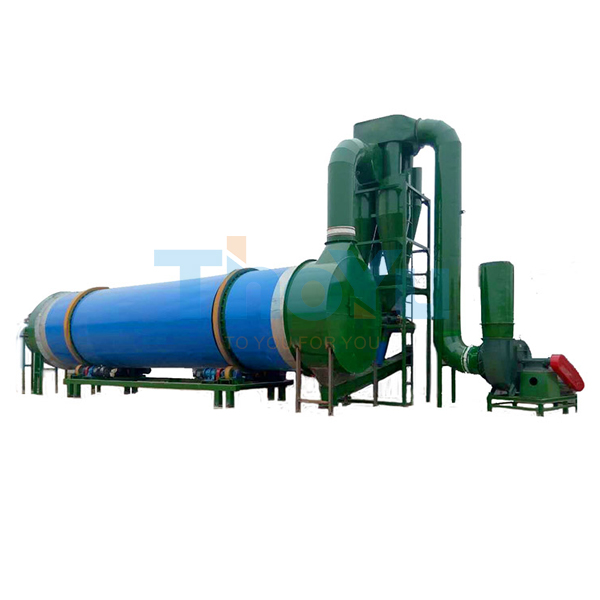
Achieving efficient drying requires balancing temperature, humidity, and airflow carefully. The system maintains hot air temperatures in the 160°C to 180°C range, optimally tuned for wood chips, avoiding thermal degradation. Wind pressure and volume adjustments utilize advanced fan control strategies to maintain consistency during variable load conditions.
Empirical data gathered from operational testing indicate drying cycles shortened by 15-20%, with energy consumption per ton of dried wood chips dropping from an industry average of 2800 kJ/kg moisture removed to approximately 1700–2000 kJ/kg, substantiating significant process efficiency gains.
Complementing the rotary drum dryer's design is the incorporation of an environment-conscious heat source—an energy-saving hot air furnace utilizing low-NOx combustion technology. This furnace reduces greenhouse gas emissions by up to 40% compared to conventional models due to enhanced combustion efficiency and controlled airflow distribution.
Additionally, the deployment of a cyclone dust collector efficiently removes wood dust particulates, achieving dust capture rates exceeding 95%. This not only improves workplace air quality but also prevents fouling of heat exchange surfaces, thus sustaining dryer efficiency over extended operation.
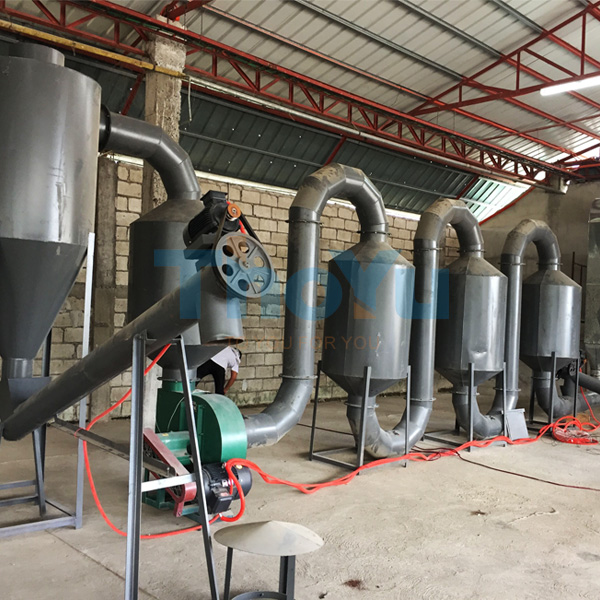
Deploying such advanced drying technology requires robust monitoring systems. Real-time sensors tracking temperature, humidity, and rotation speed feed data into PLC-controlled interfaces, allowing operators to adjust parameters dynamically. Predictive maintenance software further ensures that key components like fans and fins maintain optimal performance, reducing downtime risks.
Case studies highlight that integrating data-driven controls alongside the heat exchange innovations yields throughput improvements of up to 25%, while maintaining moisture targets within ±0.5%, critical for downstream processing and product quality compliance.