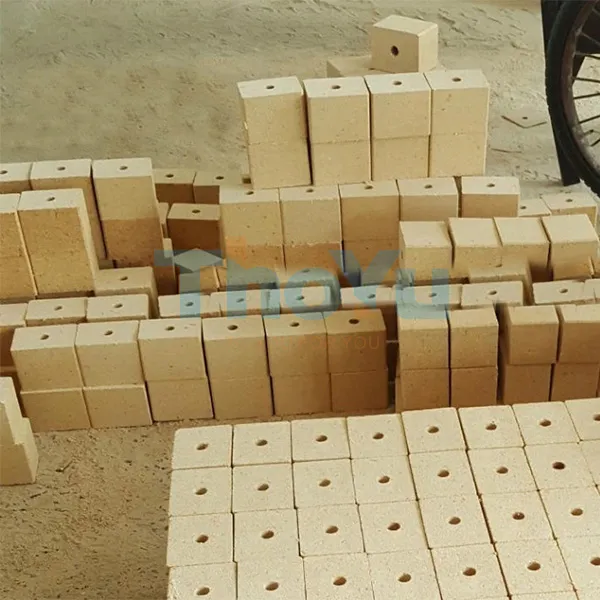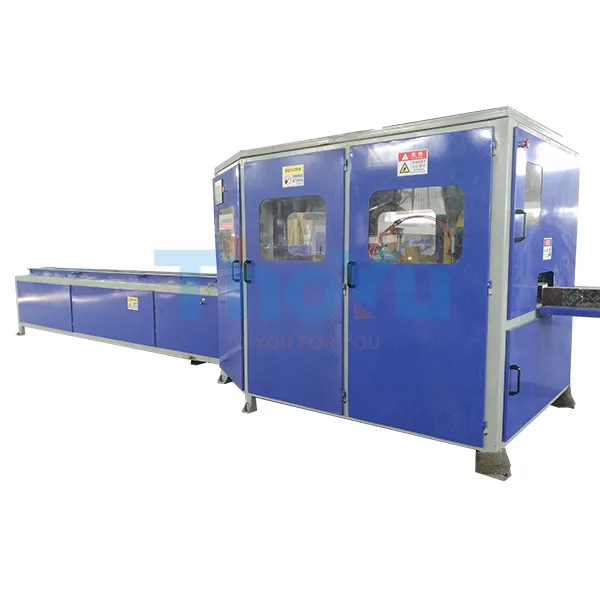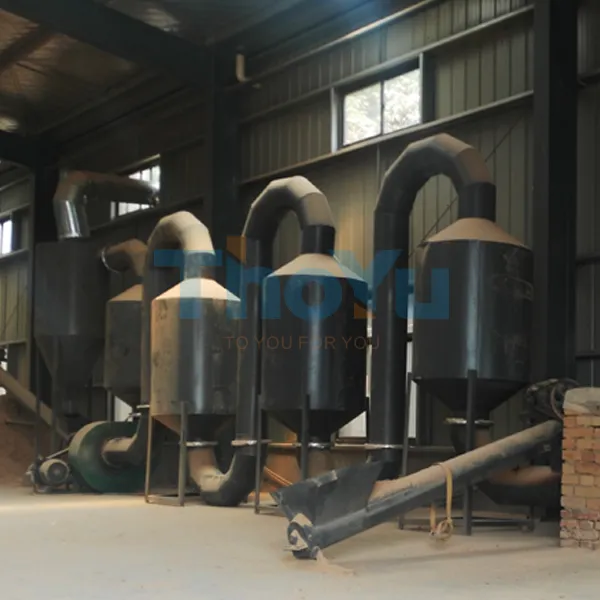

Wooden pallet manufacturing is a critical backbone for countless industries relying on efficient logistics. Among the many processes involved, chamfering plays a pivotal role—directly affecting handling safety and throughput productivity. This article delves deeply into the advanced chamfering techniques applied in wooden pallet production, with a specific focus on timber beams ranging from 20mm to 120mm in thickness. The insights provided are based on real-world operational data, making it highly relevant to manufacturing engineers, plant managers, and procurement specialists who seek to elevate their pallet production lines through automation and precision.
Chamfering refers to the process of beveling the edges of wooden pallet components—particularly the longitudinal beams—to remove sharp angles and create a tapered edge. This seemingly simple modification significantly improves the safety of handling equipment like forklifts, reduces damage to goods, and facilitates smoother engagement of pallets in automated racking systems. When done precisely, chamfering minimizes snagging risks while ensuring easier pallet stacking and transport, which boosts overall logistic efficiency.
Typically, the chamfering process for wooden pallets involves the following steps:
Manufacturers reporting optimized lines indicate a processing speed of up to 700 wooden beams per hour, leveraging modern single-operator automated chamfering machines.
The wide range of timber thicknesses presents unique challenges, such as maintaining consistent bevel angles and avoiding surface splintering. For thinner beams (~20mm), tools must reduce pressure to prevent material damage; for thicker beams (above 100mm), machines require stronger motors and precision guides to maintain cutting accuracy.
Innovations in adaptive clamping systems and tool path algorithms now enable smooth adjustment across thickness variations without manual recalibration—significantly trimming downtime.
Leading pallet manufacturers integrate automated chamfering units equipped with:
Compared to manual or semi-automatic processes, these automated systems can deliver up to a 35% increase in production efficiency and drastically reduce operator fatigue by enabling single-person operation.
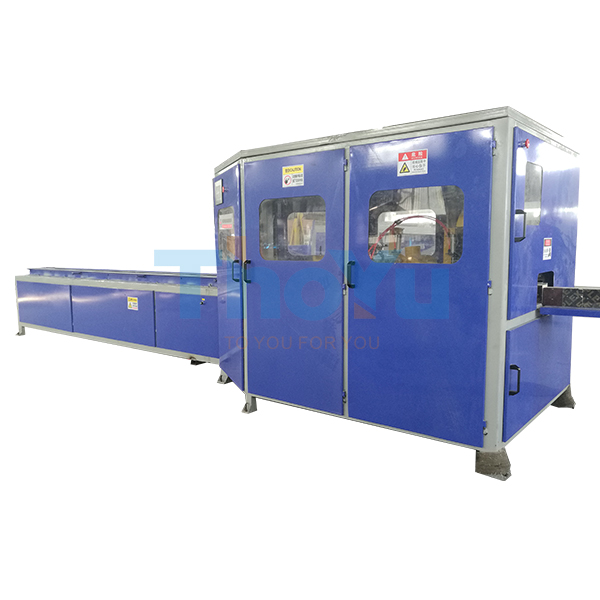
Proper operation safety is paramount given the heavy-duty rotating blades involved. Key recommendations include:
Maintenance logs and periodic audits ensure machine uptime remains at or above industry benchmark of 97% operational availability.
The rise of smart manufacturing is rapidly reshaping chamfering technology. Integration of IoT sensors and machine-learning algorithms allows real-time monitoring of tool wear, automated adjustment to beam variations, and predictive maintenance alerts. These innovations not only boost precision but also provide actionable data analytics for continuous process improvement.
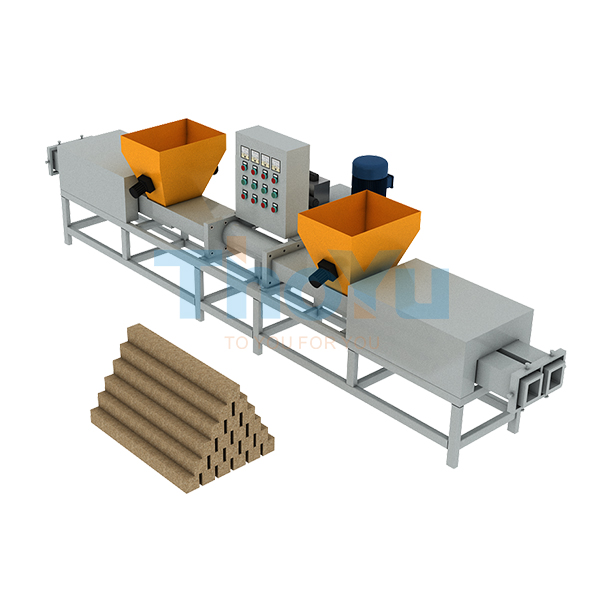
Leading companies successfully leverage a combination of:
Implementing these strategies results in safer, faster, and more reliable wooden pallet output that supports competitive logistics operations.
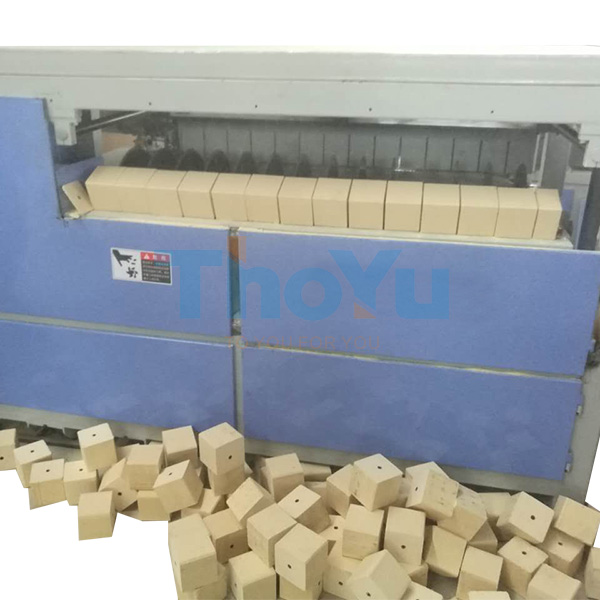
Q1: How does chamfering directly impact forklift safety?
Precise chamfering removes sharp edges, reducing chances of forks slipping off or causing splinters, thus enhancing safe pallet handling and minimizing workplace accidents.
Q2: Can a single operator manage automated chamfering equipment effectively?
Absolutely. Modern machines from ThoYu feature intuitive control systems designed for single-operator use, increasing labor efficiency without compromising safety.
Q3: What maintenance routine is recommended for chamfering machines?
Daily cleaning, weekly blade inspection and sharpening, monthly lubrication of mechanical parts, and quarterly full-system preventive maintenance are industry-standard practices.