Wood Glue Mixer Working Principle: Uniform Sawdust–Adhesive Mixing for Pallet Block Production
19 02,2026
Technical knowledge
This article explains the working principle of a vertical cylindrical wood glue mixer manufactured by Zhengzhou Tuoyu Electromechanical Equipment Co., Ltd., focusing on how spiral impeller geometry, controlled rotation speed, and an optimized material circulation path achieve fast, uniform mixing of sawdust and adhesive. It clarifies why the widely used 85:15 sawdust-to-glue ratio is critical to bonding strength and product consistency, and how deviations can affect pallet and pallet block performance. The guide also compares UF and PF resins in terms of viscosity, curing behavior, and process sensitivity, translating these differences into practical mixing adjustments. Key operating parameters—feeding rate, mixing time, and temperature control—are presented with actionable tuning tips to improve stability on the shop floor. Real production examples and a concise troubleshooting Q&A help users reduce batch variation, prevent clumping, and maintain repeatable output quality. The article concludes with a brief equipment overview and a clear next-step inquiry path for readers evaluating mixer selection for reliable pallet block manufacturing.

How a Wood Glue Mixer Actually Achieves Uniform Sawdust–Resin Blending (and Why It Matters for Block Strength)
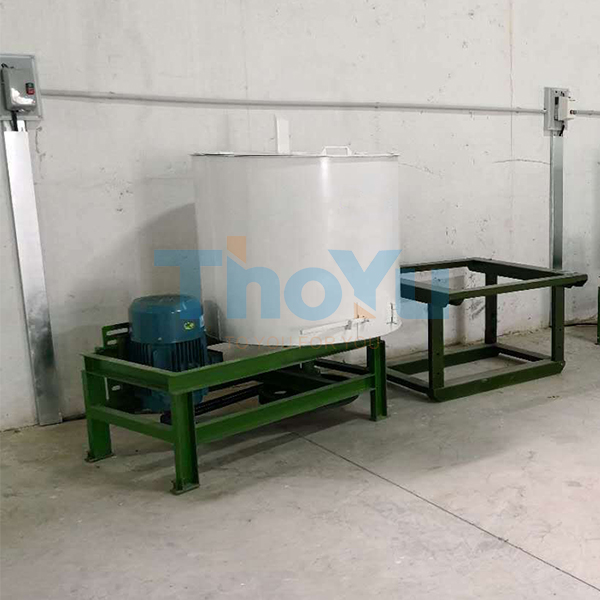
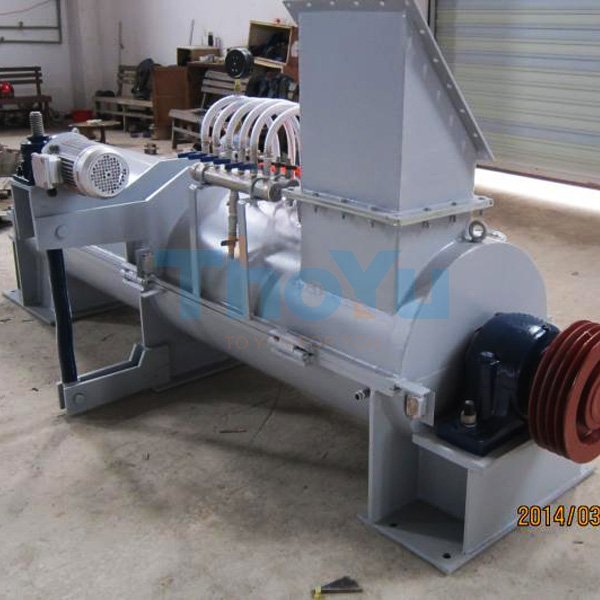
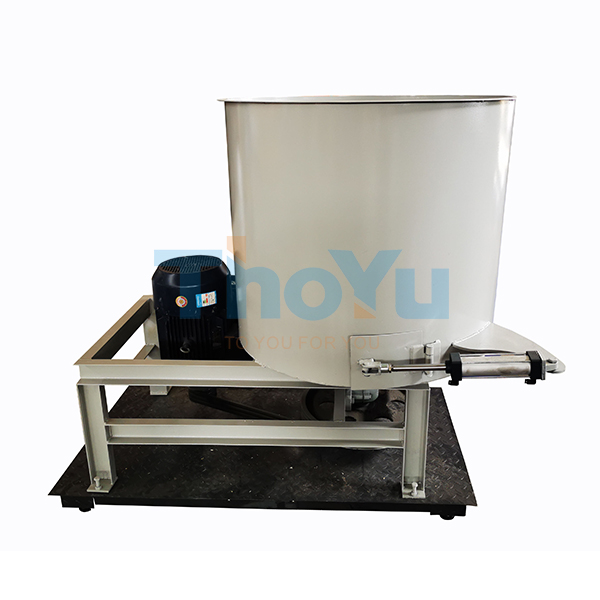
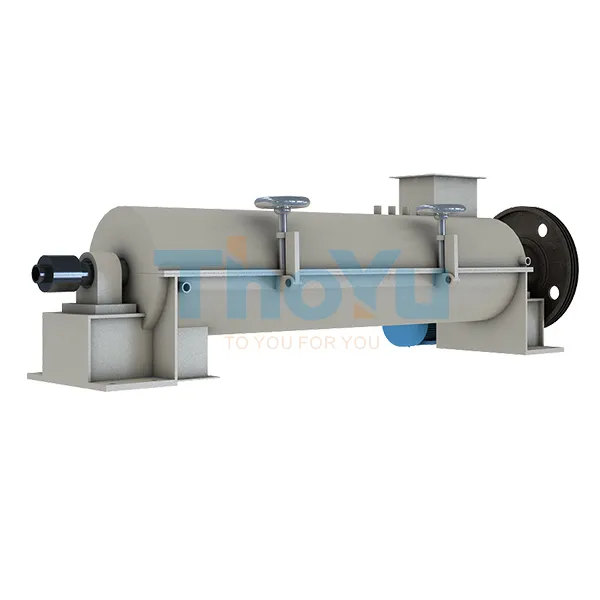
In pallet block and engineered wood production, “mixing” is rarely the real problem. The real problem is repeatable uniformity: the same glue distribution today, tomorrow, and across different operators, wood moisture levels, and resin types. A modern vertical cylindrical wood glue mixer—such as the design produced by Zhengzhou Tuoyu Electromechanical Equipment Co., Ltd.—solves this by combining propeller/spiral blade geometry, controlled RPM, and a well-planned material flow path that prevents dead zones, clumping, and over-wetting.
Below is a practical, engineering-focused explanation of the mixing principle, key parameters (ratio, speed, time, temperature), and field-proven tuning tips for both UF and PF adhesives—written for technical teams and sourcing managers who want stable output and fewer rejects.
The Core Mixing Principle: Build a Continuous “Lift–Fold–Shear” Loop
Uniform mixing of sawdust and glue is achieved when the mixer forces particles through a repeating loop: lift the bulk from the bottom, fold it back through the center, and apply shear to break micro-clumps. In a cylindrical chamber, this loop depends on three design essentials: blade profile, RPM stability, and material circulation.
Why sawdust is “harder than it looks” to mix
Sawdust behaves like a compressible, air-trapping bulk solid. If glue hits it too locally, it forms sticky balls; if shear is too low, the balls survive into pressing. If shear is too high or mixing time is excessive, fibers can be damaged and resin can begin premature thickening—both reduce strength consistency.
Spiral/Propeller Blade Geometry: The Hidden Reason Some Batches “Just Mix Better”
A well-designed spiral/propeller blade does not simply spin; it creates a controlled axial flow. In practical terms, it should: (1) pull material upward or downward intentionally, (2) push it into a recirculation path, and (3) introduce localized shear where clumps tend to form. This is the difference between a mixer that “turns” and a mixer that truly “blends”.
- Axial transport: spiral pitch encourages vertical circulation, reducing dead zones along the cylinder wall.
- Progressive folding: material is repeatedly folded back into the active zone, improving glue distribution per particle.
- Clump breakup: targeted shear points help eliminate glue-rich “nests” before they reach pressing or extrusion.
In production, operators often notice that two mixers with similar motor power can perform very differently. Most of the time, the gap is not power—it’s the flow pattern created by blade geometry and tank proportions.
RPM Control: “Fast Enough to Break Clumps, Slow Enough to Avoid Overworking”
Mixing speed is not a vanity parameter—it directly influences shear rate, heat generation, and the residence time needed for uniformity. In many sawdust-resin applications, a practical working window for a vertical cylindrical mixer is often in the range of 45–90 RPM (depending on batch size, sawdust particle size, and resin viscosity). The goal is stable circulation without throwing material to the wall and “riding” it around the tank.
| Parameter |
Common Practical Range (Reference) |
What Happens If Too Low / Too High |
| Mixer speed (RPM) |
45–90 RPM |
Low: clumps survive; High: wall-sticking, heat rise, premature thickening |
| Mixing time |
3–8 minutes per batch |
Short: streaking & dry pockets; Long: viscosity rise, fiber damage risk |
| Material temperature |
18–28°C (UF), 20–35°C (PF) |
Cold: poor wetting; Hot: faster reaction & shorter pot life |
| Feeding rate |
Steady, non-pulsing |
Pulsing: local over-wetting, “glue balls”, batch-to-batch variance |
For operations aiming at stable output, the practical approach is: lock RPM first, then tune feeding rhythm, then finalize mixing time. Changing all three at once makes troubleshooting nearly impossible.
The 85:15 Wood-to-Glue Ratio: Not a Rule of Thumb—A Strength-Control Lever
Many pallet block lines target an 85:15 ratio (by mass) of sawdust/wood flour to resin. This ratio is popular because it often balances: bond coverage (enough glue to form bridges), press stability (not overly wet), and cost-efficient resin use—without pushing curing risks too high.
A practical way to understand “too little” vs “too much” glue
At below ~12% resin, producers frequently see weak internal bonding and edge chipping after cutting. At above ~18%, issues often shift to stickiness, press contamination, longer drying needs, and uneven curing—especially when wood moisture is not tightly controlled.
The ratio is only meaningful when matched with consistent moisture. In many factories, keeping sawdust moisture around 8–12% helps maintain predictable glue demand and avoids sudden viscosity changes during mixing.
UF vs PF Resin: How Adhesive Chemistry Changes Mixing Strategy
Not all wood adhesives behave the same in a mixer. Two common options are UF (Urea-Formaldehyde) and PF (Phenol-Formaldehyde). Each reacts differently to temperature, shear, and time—so the “best settings” are not identical.
UF resin: fast wetting, pot life sensitive
- Typical benefit: good initial bonding with efficient mixing.
- Mixing risk: overheating or long mixing can shorten workable time and raise viscosity.
- Operator focus: keep temperature stable (often 18–28°C), maintain steady feed, avoid “idle spinning” after batch is ready.
PF resin: robust bonding, often higher viscosity
- Typical benefit: stronger performance in demanding environments (commonly chosen for better durability expectations).
- Mixing risk: if viscosity is high, low RPM may produce streaking and uneven coating.
- Operator focus: slightly higher shear may be required; temperature window can be a bit broader (often 20–35°C) but must be consistent.
The Operating “Knobs” That Control Stability: Feeding, Time, and Temperature
Most quality swings come from small deviations in three areas. When a batch looks “almost right” but fails later in pressing, the cause is often here—not in the adhesive brand.
1) Feeding rate: keep it steady, not fast
A stable feed avoids sudden glue concentration spikes. For many lines, splitting glue addition into two stages (for example, 60% early + 40% after initial circulation forms) reduces glue balls and improves coating uniformity—especially for mixed particle sizes.
2) Mixing time: stop when distribution is achieved
A common reference is 3–8 minutes per batch. Instead of chasing a fixed minute value, many experienced operators verify by sampling from top/middle/bottom and checking whether the feel and color are consistent (no dry pockets, no wet lumps).
3) Temperature: manage viscosity and pot life
Temperature drift changes resin viscosity and reaction speed. Even a 5–8°C shift can noticeably affect flow and coating behavior. If the workshop environment is hot, reducing idle time and ensuring batches go to forming/pressing promptly is often more effective than increasing RPM.
Real-World Case Snapshot: Reducing Rejects by Fixing Flow, Not Adding More Glue
Scenario
A pallet block producer reported inconsistent density and occasional edge cracking. Operators attempted to solve it by increasing resin from 15% to 17%, but the improvement was unstable and press cleaning frequency increased.
Adjustment
They standardized steady feeding and changed the glue addition sequence into two stages, keeping RPM within a controlled band (around 60–75 RPM) and reducing “extra mixing” once the batch looked uniform.
Result (typical observation)
The line returned to 15% resin with better consistency. Internal defects decreased, and operators noted fewer visible wet lumps entering the forming stage—helping stabilize pressing without relying on higher glue consumption.
FAQ: Questions Buyers and Operators Ask Before They Trust a Glue Mixer
How can they tell if mixing is uniform without lab equipment?
A practical method is multi-point sampling (top/middle/bottom). The mixed material should show consistent appearance and feel, with no dry pockets and no sticky balls. If a batch shows “wet streaks,” the issue is usually feeding rhythm or insufficient circulation—not resin strength.
Why do glue balls appear even when the ratio is correct?
Glue balls typically form when glue contacts sawdust in a localized spot faster than the mixer can disperse it. Two-stage glue addition, steady feeding, and a stable RPM often reduce this dramatically. Also check sawdust moisture—high moisture can cause uneven wetting and sudden clumping.
Should they increase RPM to solve uneven mixing?
Not automatically. If RPM is too low, yes, circulation may be weak. But too high RPM can push material to the wall and reduce effective folding, while also increasing heat. Many lines improve uniformity more by stabilizing feeding and mixing time than by pushing speed upward.
Does UF vs PF require different operator habits?
Yes. UF often rewards fast, disciplined batching with minimal idle time after uniformity is reached. PF may require slightly higher shear or a longer window to reach uniform coating if viscosity is higher, but consistency in temperature and feeding remains essential for both.
Want Stable 85:15 Mixing, Less Clumping, and Cleaner Pressing?
For pallet block lines that cannot afford batch-to-batch variability, a properly designed vertical cylindrical wood glue mixer is one of the fastest ways to improve uniformity without “solving” problems by adding more resin. Share their target capacity, resin type (UF/PF), and sawdust moisture range—then match the configuration and operating parameters to the real production environment.
Explore Tuoyu’s Vertical Cylindrical Wood Glue Mixer for Sawdust & Resin Mixing
Typical inquiry details to prepare: resin type (UF/PF), target ratio, batch size, and desired mixing cycle time.
In day-to-day production, uniform mixing is less about “more power” and more about controlling the flow path—blade-driven circulation, stable RPM, disciplined feeding, and a temperature window that keeps viscosity predictable.