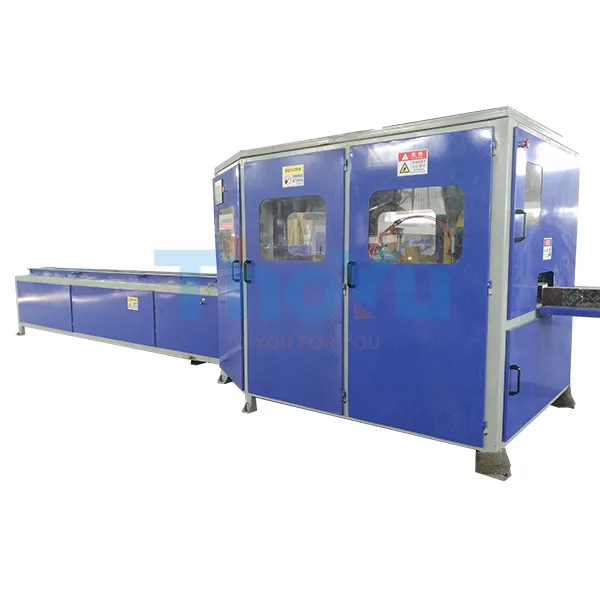
Large-Scale Wood Crushing Equipment Selection Guide: Choosing Between Hammer Mill and Disc Crusher for Pallets and Furniture Offcuts
19 03,2026
Tutorial Guide
Struggling to select the right large-scale wood crushing equipment? This guide explains how to scientifically choose between hammer mill and disc crusher models based on wood characteristics such as density, moisture content, and impurity levels from sources like pallets and furniture offcuts. We compare processing efficiency, energy consumption, and output particle size, while providing recommendations on space adaptation and configuration for downstream uses such as board production or fuel. Additionally, practical installation tips, tuning steps, and common troubleshooting checklists help you avoid capacity bottlenecks and implement an efficient, green recycling process.

Your Comprehensive Guide to Selecting Large-scale Wood Crushing Equipment
Choosing the optimal large wood crushing machine for your business can feel daunting, especially when dealing with varying wood materials like pallets and furniture offcuts. The key to maximizing efficiency, reducing downtime, and aligning with your downstream processes lies in understanding the distinct characteristics of your wood waste and how these inform your equipment choice.
Understand Your Wood Material’s Characteristics
Wood sources differ widely in their density, moisture content, and impurity levels, all critical factors in equipment selection:
- Density: Heavy pallet wood typically has higher density compared to lighter furniture offcuts.
- Moisture Content: Pallets often exhibit fluctuating moisture levels (within 15% to 35%), impacting crushing performance.
- Contaminants: Iron nails and other metallic parts are common, requiring robust de-ironing mechanisms with efficiencies often exceeding 95% to prevent equipment damage.
Hammer Mill vs. Disc Type Crushers: Performance and Cost Analysis
You have two primary crushing technologies to consider: hammer mills and disc (knives) crushers. Here’s how they compare across vital metrics:
| Criteria |
Hammer Mill |
Disc Crusher |
| Crushing Efficiency |
High for hard, dense wood with coarse output |
Better for softer wood and finer particle size control |
| Energy Consumption |
Usually higher (up to 15-20 kWh per ton) |
Lower energy footprint (~10-12 kWh per ton) |
| Maintenance & Wear |
Higher wear on hammers; simpler parts replacement |
Knife sharpness critical; often requires skilled maintenance |
| Capital & Operating Costs |
Moderate initial cost; higher energy costs |
Higher upfront investment; energy-efficient in long run |
Matching Equipment to Application Scenarios
Your choice depends heavily on intended use and material type:
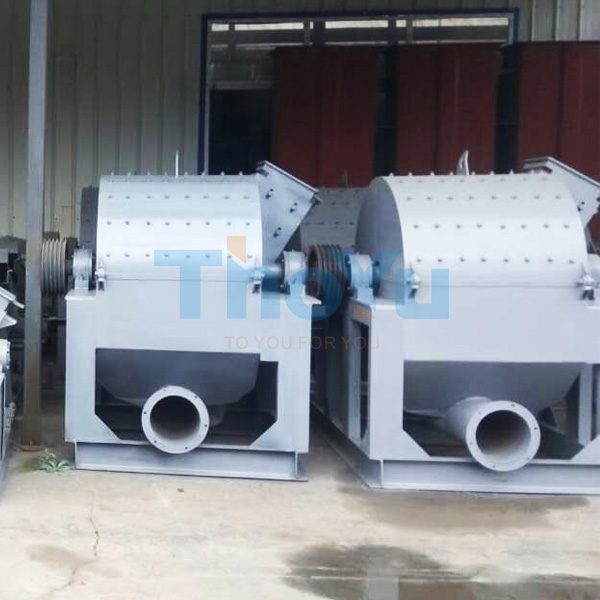
- Pallet Crushing: Usually involves denser wood with embedded nails — hammer mills coupled with advanced magnetic separators delivering up to 95% metal removal are ideal.
- Furniture Offcuts: Often contain softer wood and require finer granularity for re-manufacturing — disc crushers with precise particle size control prevail.
- Output Uses: For particleboard manufacturing, finer and uniformly sized particles are essential, favoring knife-type crushers. For biomass fuel, coarser chips suffice, making hammer mills efficient.

Optimizing Equipment Parameters: Capacity & Space Considerations
To align your equipment selection with operational goals, evaluate your required throughput and facility layout:
- Throughput Targets: For medium to large operations, daily throughput ranges from 5 to 30 tons. Hammer mills can handle high volume, but knife crushers offer better control on batch size and quality.
- Space Constraints: Hammer mills generally require more vertical clearance due to rotor size, while disc crushers have a compact footprint, ideal for tight industrial plants.
- Customization: Adjustable rotor speeds and knife configurations enable optimization for your wood type and downstream process, reducing energy consumption and wear.
Installation, Startup Procedures and Troubleshooting
Efficient integration of wood pulverizing equipment involves standardized steps:
- Secure and level foundation installation per manufacturer specs.
- Check electrical and mechanical connections with precise torque calibration.
- Conduct dry-run tests ensuring rotor balance and absence of abnormal vibrations.
- Execute controlled loading of raw material with continuous monitoring of output quality and noise levels.
Common issues like frequent hammer wear or knife dullness, unusual noises, or inconsistent particle size can generally be resolved by timely part replacement, rotor speed adjustment, and cleaning magnetic separators.
Interactive Insight: Which Crusher Fits Your Wood Type?
Consider these quick cues for your selection:
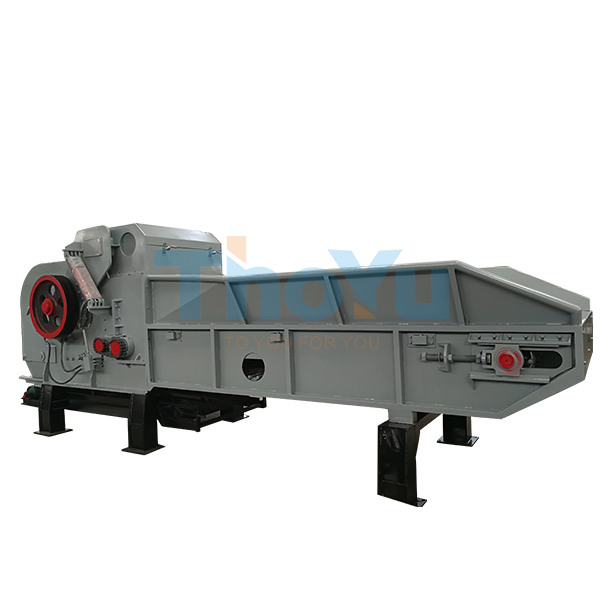
- Is your wood material largely contaminated with nails or screws? Go for Hammer Mill with a strong de-ironing system.
- Do you require precise particle size for downstream processing like panel manufacturing? Choose Disc Crusher models.
- Is energy efficiency a priority due to operational budgets? Disc crushers typically offer superior energy savings.
With a reputation built on advanced technology and tailored support, ThoYu's comprehensive line of wood crushing equipment is engineered to optimize your recycling and manufacturing operations. Integrate state-of-the-art machinery to ensure higher throughput, energy efficiency, and consistent product quality.