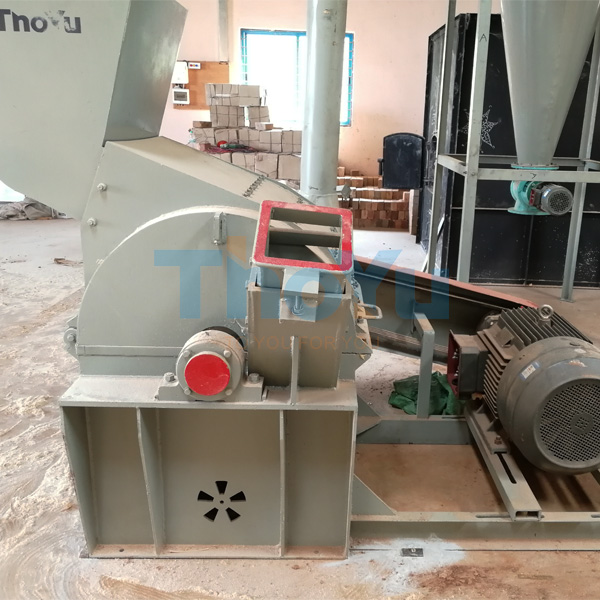
Wood Crusher Selection Guide: How to Choose the Right Crushing Fineness for Eco-Friendly Panel Applications
In today’s sustainable manufacturing landscape, heavy-duty wood crushers play a pivotal role in producing environmentally friendly panels. Selecting the appropriate crushing fineness aligned with your panel application is key to achieving optimal product density, strength, and operational efficiency. This article delves into the technical principles behind wood crushing, explores the impact of particle size on panel properties, and provides actionable guidance on choosing multi-stage crushing and effective dust removal systems.
Understanding Wood Crushing and Its Effect on Eco-Friendly Panel Quality
Wood crushers transform raw timber materials into particles suitable for subsequent panel manufacturing. The fineness of these particles directly influences the density and mechanical strength of panels such as particleboard and fiberboard. For instance, a crushing fineness of around 1 mm particle size typically yields higher-density panels with improved tensile strength, which is ideal for furniture-grade eco-panels.
Conversely, coarser particle sizes in the range of 2–3 mm can reduce energy consumption during pressing but may compromise structural consistency, making them better suited for non-load-bearing interior panels. Balancing these parameters is critical, especially when targeting certifications like CARB or E0 for formaldehyde emissions and sustainability.
Technical Insight: Data collected from multiple eco-panel factories indicates that reducing particle size from 3 mm to 1 mm can improve panel bending strength by up to 18%, while increasing production energy consumption by approximately 12%.
Energy Efficiency & Operational Data: Real-World Case Studies
A comparative study across three manufacturing plants highlighted the correlation between crushing fineness, energy consumption, and throughput:
- Plant A: Employed a heavy-duty crusher with 1 mm fineness; achieved a panel density of 750 kg/m³ and a production rate of 1500 m²/day with an energy consumption of 780 kWh.
- Plant B: Used 2 mm fineness settings; produced panels at 680 kg/m³ density and 1700 m²/day throughput with 650 kWh energy usage.
- Plant C: Opted for a mixed fineness process averaging 1.5 mm, balancing strength and operational cost, producing 1600 m²/day at 710 kg/m³ density with 700 kWh consumption.
These findings emphasize selecting the crushing fineness tailored to your production goals—whether prioritizing mechanical strength, energy efficiency, or throughput.
Key Selection Criteria for Heavy-Duty Wood Crushers
When choosing a wood crusher, consider the following factors:
- Material Type and Moisture Content: Hardwoods versus softwoods and moisture levels impact crusher wear and final particle morphology.
- Desired Particle Size Distribution: Specify target fineness based on panel type and product performance requirements.
- Throughput & Capacity: Match machine capacity with production volume to avoid bottlenecks.
- Energy Consumption & Sustainability: Opt for crushers with proven energy-efficient designs and integrated dust management systems.
- Multi-Stage Crushing Systems: For complex particle size requirements, multi-stage crushing offers precise fineness control.
Incorporating a robust dust collection system is essential for meeting workplace safety standards and minimizing material loss during processing.
Implementing Multi-Stage Crushing & Advanced Dust Removal Systems
Multi-stage crushing leverages a sequential reduction approach—firstly breaking raw wood into coarse chips, followed by secondary refinements to achieve finer particles. This method significantly enhances fiber consistency and panel uniformity. Coupling crushers with cyclonic or baghouse dust collectors ensures environmental compliance and keeps the production environment clean.
Operators report up to 25% improvements in raw material utilization and 30% reductions in maintenance downtime when integrating these systems.
Tailored Recommendations for Different Production Scales
Small-Scale Operations: A single-stage crusher with adjustable screen sizes is cost-effective, supporting flexible fineness adjustments for niche eco-panel markets.
Medium to Large Factories: Demand multi-stage crushing lines combined with automated dust extraction and particle size monitoring systems for consistent product quality.
Collaborative consultation with equipment suppliers and review of existing case studies help optimize configurations.
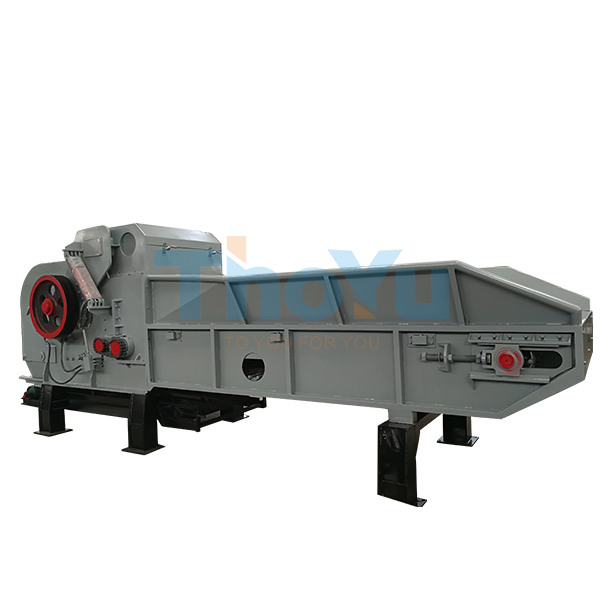
Frequently Asked Questions
Q1: What is the ideal crushing fineness for producing high-strength eco-friendly particleboard?
Typically, a particle size around 1 mm provides the optimal balance between panel density and mechanical strength, although exact specifications depend on the raw material and product standards.
Q2: How does the moisture content of wood affect crusher performance?
Higher moisture content can increase wear on crusher blades and reduce crushing efficiency; it's best to maintain wood moisture below 12% prior to crushing.
Q3: Can multi-stage crushing significantly increase overall energy costs?
While multi-stage crushing may raise electricity consumption by approximately 10–15%, it yields superior particle size distribution and product quality, often translating into higher market value and less rework.
Q4: Is dust collection mandatory for wood crushing operations?
Yes, efficient dust removal not only ensures regulatory compliance but also improves operator health and reduces material wastage, directly impacting operational sustainability and costs.