
In the wood processing industry, drying operations typically account for 30-40% of total energy consumption, making it a critical area for cost reduction and sustainability improvements. Wood chip dryers, especially rotary drum systems, present significant opportunities for efficiency gains through optimized heat exchange technology. This comprehensive guide explores proven methods to achieve 30-50% energy savings while maintaining precise moisture control—a game-changer for wood processing facilities aiming to enhance profitability and environmental performance.
Industry Challenge: Wood processing facilities often struggle with energy-intensive drying operations that compromise profitability and environmental goals. Traditional drying systems typically operate at only 40-55% thermal efficiency, resulting in excessive energy waste and inconsistent moisture control.
At the core of efficient wood chip drying lies the heat exchange mechanism between the drying medium (hot air) and the wood particles. Conventional dryers rely primarily on direct contact heat transfer, which often leads to uneven heating and significant energy loss through exhaust gases.
Modern systems incorporate advanced heat exchange designs that maximize thermal efficiency through three simultaneous mechanisms:
The integration of internal finned tubes represents the most significant advancement in rotary drum dryer efficiency. These specialized heat exchange surfaces increase the effective heat transfer area by 200-300% compared to smooth-walled drums, dramatically improving thermal performance.
| Parameter | Standard Dryer | Finned Tube Dryer | Improvement |
|---|---|---|---|
| Thermal Efficiency | 40-55% | 65-80% | +25-30% |
| Energy Consumption | 800-1000 kWh/ton | 400-600 kWh/ton | -30-50% |
| Moisture Control Precision | ±3% | ±1% | +66% |
The geometric design of the fins—including height, spacing, and angle—directly impacts performance. Optimal fin configurations create turbulence in the air flow, breaking through boundary layers that impede heat transfer. This results in more uniform heating and faster moisture removal, particularly critical for achieving the target moisture content below 10% required for high-quality wood products.
Maintaining precise temperature parameters is essential for both efficiency and product quality. The optimal temperature range for wood chip drying falls between 150°C and 180°C, balancing moisture evaporation rates with energy consumption and product integrity.
Advanced control systems utilize multiple temperature sensors combined with PID (Proportional-Integral-Derivative) controllers to maintain these temperature zones, adjusting fuel input and air flow in real-time based on feedback from moisture sensors.
Fan system design significantly impacts both energy consumption and drying performance. The relationship between air flow rate, temperature, and pressure drop creates a delicate balance that directly affects overall efficiency.
Centrifugal fans with variable frequency drives (VFDs) offer the greatest flexibility, allowing operators to adjust air flow based on load conditions. A properly sized fan system can reduce energy consumption by 15-25% compared to fixed-speed systems, while improving drying uniformity.
Modern wood chip drying systems incorporate integrated environmental controls that address both regulatory compliance and operational efficiency. Cyclone separators remove 95-99% of particulate matter from exhaust streams, preventing equipment fouling and reducing emissions.
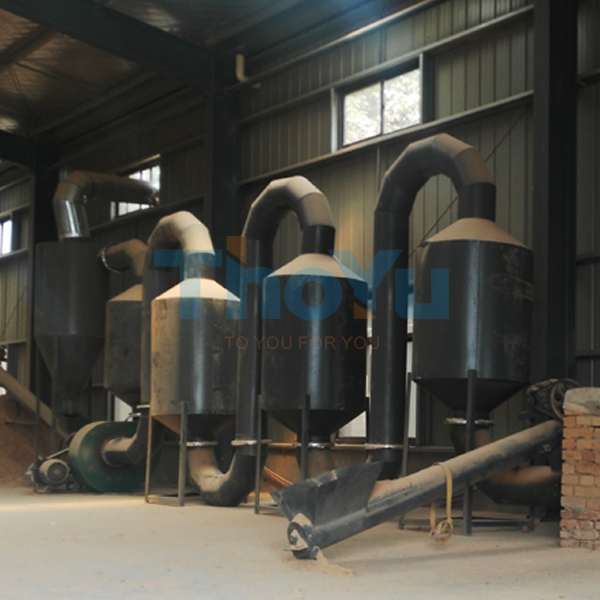
Heat recovery systems capture waste heat from exhaust gases, preheating incoming air and reducing fuel requirements by an additional 10-15%. When combined with high-efficiency burners (90%+ thermal efficiency), these systems create a comprehensive approach to sustainable drying operations.
Discover how advanced heat exchange technology can reduce your energy costs by 30-50% while improving product quality and environmental performance.
Explore Customized Drying SolutionsImplementing these technologies requires careful analysis of existing operations, including material characteristics, production volumes, and energy costs. Many facilities achieve return on investment within 12-24 months through energy savings alone, with additional benefits from improved product quality and reduced maintenance requirements.
As wood processing continues to evolve toward more sustainable practices, the integration of advanced heat exchange technology and intelligent control systems becomes not just a competitive advantage, but a necessity for long-term viability in an increasingly regulated and cost-conscious industry.