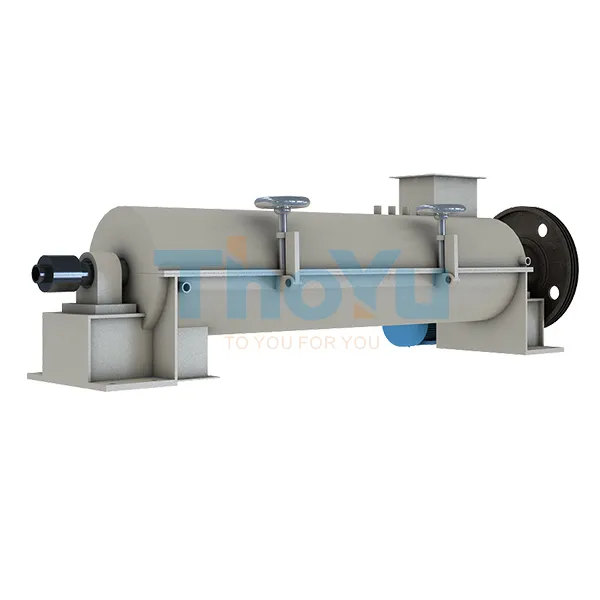
In the woodworking industry, maintaining optimal wood chip moisture content (typically below 10%) is critical for product quality and downstream processing. However, conventional drying methods often face significant energy consumption challenges, causing high operating costs and environmental concerns. To address these issues, Zhengzhou Tuoyu Electromechanical Equipment Co., Ltd. has developed an innovative wood chip rotary drum dryer featuring built-in finned heat exchange technology, which delivers an outstanding 30%–50% energy savings while enhancing drying efficiency.
Traditional rotary drum dryers utilize direct hot air to evaporate moisture from wood chips; however, they often suffer from low thermal efficiency—usually below 50%—resulting in excessive fuel consumption and longer drying cycles. The heterogeneous nature of wood chips, with varying sizes and moisture distribution, further complicates achieving uniform drying without overheating or damage.
The core innovation lies in the integration of internal fins attached to the rotary drum’s inner wall, greatly expanding the heat transfer surface area and enhancing convective heat exchange with the drying gas. These fins promote turbulent flow, improving heat transfer coefficients by approximately 25% compared to smooth drums. This design allows optimal utilization of thermal energy, reducing flue gas temperature by effectively reclaiming heat to warm incoming air streams.
Through computational fluid dynamics (CFD) simulations and pilot tests, it was demonstrated that the finned surfaces elevate heat transfer efficiency from an average of 48% to nearly 70%, enabling faster moisture evaporation rates and shortening drying time by 20%–30%.
The dryer employs a direct airflow system, which injects heated gas longitudinally through the rotary drum, ensuring consistent contact between hot air and wood chips. Precise control of drying parameters such as temperature (maintained between 140°C and 160°C) and residence time is crucial to achieve target moisture reduction without compromising wood chip integrity.
Optimized fan configurations further balance airflow rates and pressure, enabling uniform gas distribution and preventing hotspot formation inside the drum. This approach mitigates risks of scorching and uneven drying that commonly plague conventional dryers.
Complementing the finned heat exchanger, the rotary drum dryer integrates an energy-efficient thermal oil heat furnace, which provides stable heat input with rapid temperature ramp-up and minimal fuel waste. Compared to standard gas-fired burners, this system can improve thermal energy utilization by 15%–20%.
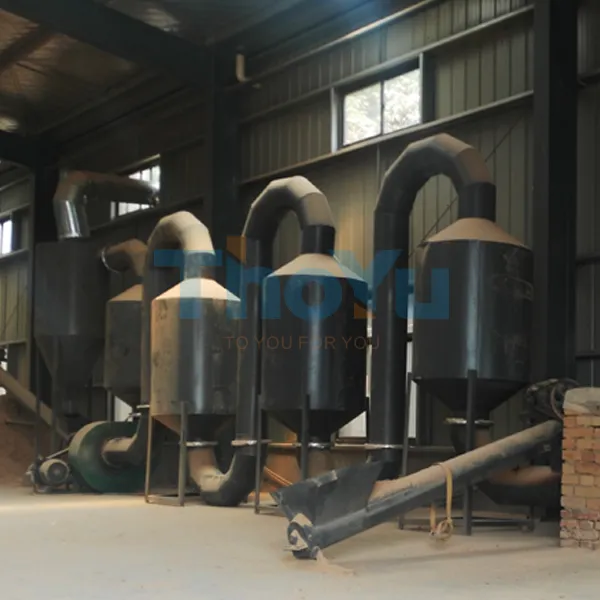
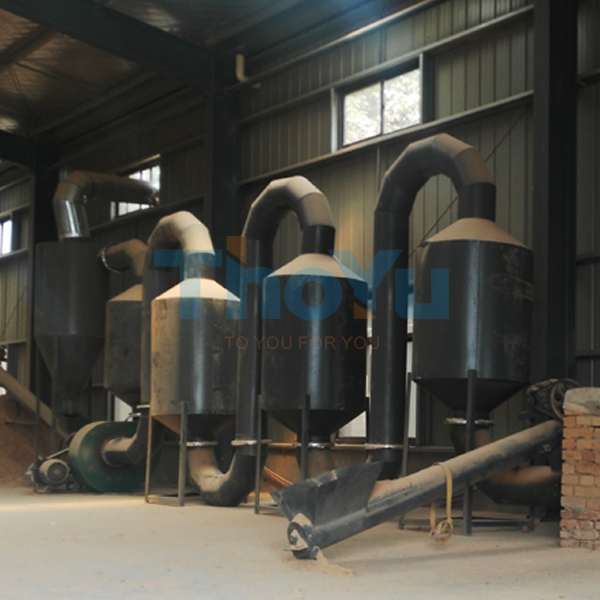
Additionally, a high-performance cyclone dust collector ensures effective removal of wood dust particles, achieving separation efficiencies exceeding 90%. This technology not only protects downstream equipment but also adheres to stringent environmental regulations by reducing fugitive emissions.
Field data confirm that plants retrofitted with the built-in finned heat exchanger rotary drum dryer report energy consumption reductions between 30% and 50%, translating to fuel savings of up to 1,500 GJ annually for medium-sized facilities processing 5 tons/hour of wood chips.
| Parameter | Conventional Dryer | Finned Heat Exchanger Dryer |
|---|---|---|
| Thermal Efficiency | 48% | ~70% |
| Drying Time | 120 minutes | 84-96 minutes |
| Energy Savings | Baseline | 30%-50% |
These improvements translate into lower operating costs, reduced greenhouse gas emissions, and enhanced throughput rates—resulting in higher return on investment. The finned heat exchange technology is adaptable, making it suitable for both new installations and retrofit projects targeting existing rotary dryers.