Selecting Wood Beam Thickness for Pallets: Comprehensive Guide for 20mm-120mm with Forklift Efficiency Analysis
16 03,2026
Application Tips
This article provides an in-depth analysis of how to select wood beam thickness for pallets ranging from 20mm to 120mm, covering their application across European EUR/EPAL, North American GMA, and customized pallet standards. It explores the impact of chamfer angles and depths on forklift entry efficiency, supported by practical data and real-world case studies. Highlighting the evolution from manual chamfering to ThoYu’s high-precision adjustable chamfer machines, the article demonstrates how automation reduces defect rates from 8% to 2%, ensuring consistent production quality. Professionals in pallet manufacturing and logistics will find actionable insights to enhance load capacity, operational efficiency, and digital process management for smart manufacturing upgrades.

How to Choose Wooden Pallet Stringer Thickness: Comprehensive Analysis from 20mm to 120mm
Selecting the right thickness for wooden pallet stringers is a critical decision impacting the structural integrity, handling efficiency, and overall lifecycle cost of pallets. This article offers an in-depth look at the application scenarios of varying stringer thicknesses—from 20mm to 120mm—in European, North American, and customized pallet standards. It also examines the relationship between chamfer angle design and forklift operation efficiency, backed by real data and customer insights. Manufacturing managers and process engineers alike can leverage these insights to enhance pallet quality and operational productivity.
1. Impact of Stringer Thickness on Load Capacity and Forklift Handling
Wooden pallet stringers serve as the backbone supporting load weight and ensuring pallet durability. Thicker stringers enhance load capacity but add weight and cost, while thinner variants reduce material consumption but may compromise strength.
Industry-standard thicknesses range typically between 20mm—used predominantly for light-duty pallets—and up to 120mm for heavy-duty or custom industrial pallets. For instance, a 20mm stringer supports typical loads up to 500 kg, suitable for retail goods or light manufacturing components. In contrast, 100mm or greater thickness stringers handle loads exceeding 2000 kg, commonly required in automotive or heavy machinery logistics.
2. Application Scenarios for 20mm to 120mm Thickness in Standard Pallets
Different pallet standards dictate stringer thickness selections based on regional logistics needs:
- EUR/EPAL Pallets: Typically employ 30mm to 45mm thick stringers optimized for medium load capacity (~1000kg) and high turnover in European supply chains.
- GMA Pallets (North America): Commonly use 38mm to 50mm thick stringers to support a balance between durability and weight, catering to the varied industrial sectors.
- Custom Pallets: Thickness up to 120mm is specified for specialized heavy-load or long-term use pallets, often integrated with automated logistics systems.
3. The Role of Chamfer Angle and Depth on Forklift Insertion Efficiency
Chamfering the edges of wooden stringers facilitates smoother entry and exit of forklift forks, significantly improving operational throughput and reducing handling damage.
Experimental data demonstrates:
- A 30° chamfer angle improves forklift insertion speed by approximately 12% compared to non-chamfered edges.
- Increasing the angle to 45° further enhances entry smoothness; however, deeper chamfering must be balanced to maintain stringer structural integrity.
- Optimal chamfer depth varies with stringer thickness, with a general guideline of 10–15% of thickness for best handling efficiency.
These findings highlight the importance of precision chamfer design tailored to stringer specifications.
4. Technological Evolution: From Manual Chamfering to Automatic Adjustable Chamfer Machines
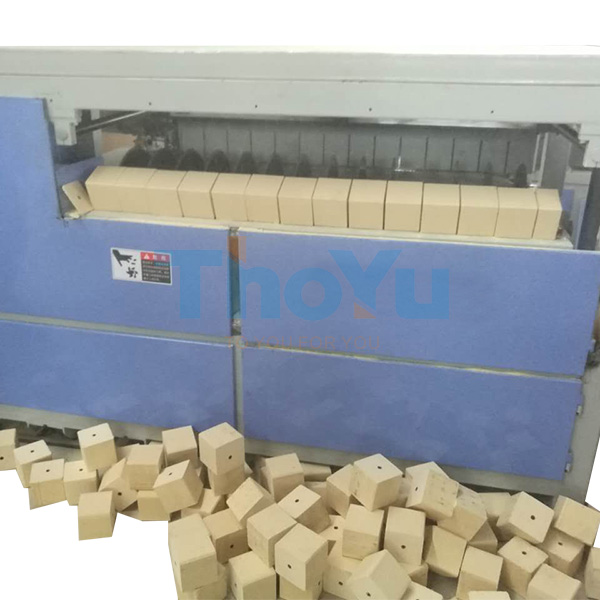
Historically, chamfering was performed manually leading to variability in quality and high reject rates, sometimes exceeding 8%. The advent of automatic adjustable chamfer machines—such as those developed by ThoYu—has revolutionized this process.
These machines feature:
- High precision, multi-angle adjustable chamfering capabilities accommodating stringers from 20mm to 120mm thickness.
- Consistent and repeatable processing that reduces deviation and waste.
- Improved throughput, cutting cycle times by up to 25% compared to manual methods.
5. Customer Success: Waste Reduction and Production Consistency
Since integrating the
ThoYu automatic chamfer machine, one European pallet manufacturer reported a reduction in waste rate from 8% to 2%, alongside a 30% improvement in production consistency. This upgrade also enabled the company to meet tighter standardization demands across both EUR and customized pallets.
6. Leveraging Digital Process Control for Intelligent Pallet Manufacturing
Modern pallet production increasingly relies on digital process management integrated with chamfering machinery. Features such as real-time thickness measurement, chamfer angle adjustment, and automated logging empower manufacturers to maintain quality control and enable data-driven production optimization.
This digital transformation underpins broader initiatives in smart factories and Industry 4.0 adoption, enhancing traceability and reducing operator dependency.
7. Practical Recommendations for Pallet Makers
- Identify application-specific load requirements before selecting stringer thickness.
- Optimize chamfer angles (generally between 30° to 45°) and depth proportionally to the thickness to facilitate forklift handling without compromising strength.
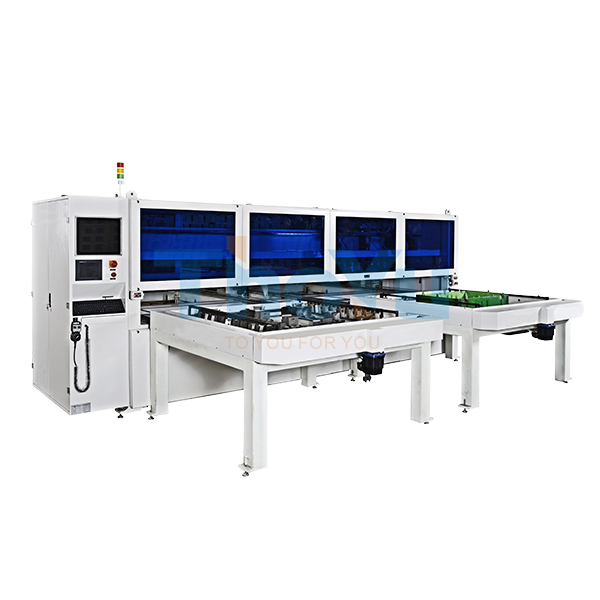
- Adopt automated chamfering solutions like the ThoYu adjustable high-precision chamfer machine to reduce waste and improve throughput.
- Implement digital monitoring tools to ensure repeatability and to support continuous improvement programs.