
Have you ever wondered why some wooden pallets maintain their structural integrity even after years of heavy use, while others start to loosen after just a few months? The secret often lies in a critical yet overlooked component of the production process: the mixing quality of sawdust and glue. In this technical deep dive, we'll explore how vertical wood glue mixers achieve the perfect blend that transforms ordinary materials into industrial-strength pallets.
Vertical wood glue mixers play a pivotal role in pallet production, directly impacting two critical business metrics: product durability and material costs. Industry data shows that improper mixing can reduce pallet load capacity by up to 35% while increasing glue consumption by 15-20%. For a mid-sized pallet manufacturer producing 10,000 pallets monthly, this translates to approximately $45,000 in avoidable annual losses.
What separates an effective mixer from a subpar one? The answer lies in two core technologies: precision-engineered propeller design and adaptive speed control systems. These components work in harmony to address the unique challenges of combining sawdust – with its varying particle sizes and moisture content – with different types of wood adhesives.
Industry Insight: A recent study by the Pallet Manufacturers Association found that 68% of product failures in wooden pallets can be traced back to inadequate glue mixing, making it the single largest cause of quality control issues in the industry.
The geometry of a mixer's propeller blades might seem like a minor detail, but it's actually the cornerstone of mixing efficiency. Modern vertical mixers employ a helical design with carefully calculated pitch angles and blade curvature to create three-dimensional material movement.
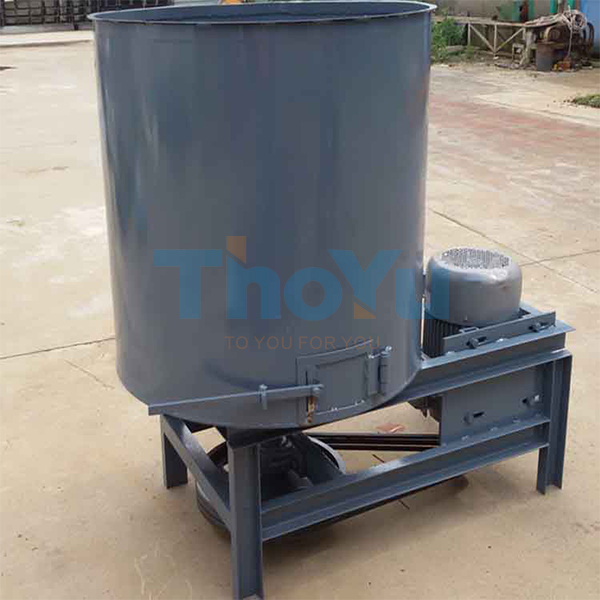
This sophisticated design creates a "double vortex" mixing action: material is drawn upward along the walls, then cascades downward through the center, ensuring each particle of sawdust encounters glue molecules multiple times during the mixing cycle.
While propeller design provides the mechanical framework for mixing, precise speed control is what makes the process adaptable to different materials and production requirements. Today's advanced mixers feature variable frequency drives (VFD) that can adjust rotational speed from 35 RPM to 180 RPM, with microsecond response times to changing load conditions.
Select all that apply to your current production process:
If you selected two or more issues, your mixing process likely needs optimization – read on for solutions.
Different adhesive types require distinct speed profiles to achieve optimal results:
| Adhesive Type | Optimal Speed Range | Mixing Duration | Key Considerations |
|---|---|---|---|
| UF Glue | 85-110 RPM | 2-3 minutes | Lower viscosity requires gentler mixing to prevent aeration |
| PF Glue | 120-150 RPM | 3-4 minutes | Higher viscosity needs increased shear force for proper dispersion |
| Specialty Formulations | 150-180 RPM | 4-5 minutes | High-solid content requires maximum shear for homogeneous mixing |
The 85:15 sawdust-to-glue ratio has become an industry standard for good reason – it represents the optimal balance between bond strength, material cost, and production efficiency. But what makes this specific ratio so effective?
Testing data shows that at 85:15, the mixture achieves a shear strength of 1.8-2.2 MPa, which is more than sufficient for most industrial pallet applications. Increasing glue content beyond 15% yields diminishing returns in strength (only 5-7% increase with 20% glue) while raising material costs significantly. Conversely, reducing glue below 12% causes a dramatic 30-40% drop in bond strength.
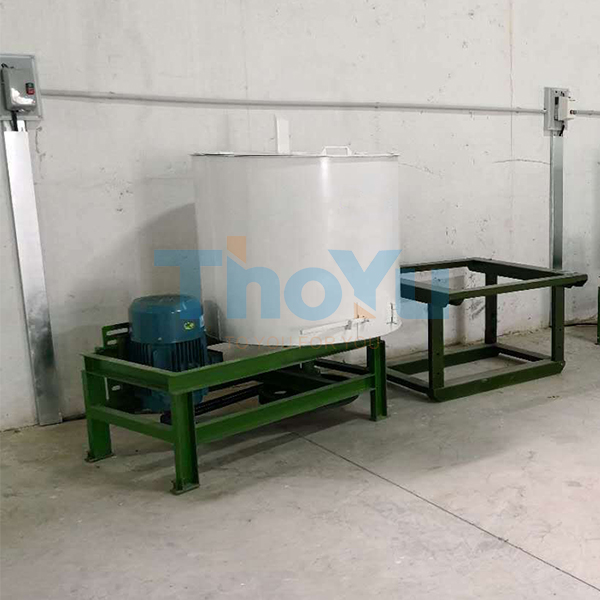
While 85:15 is the starting point, experienced operators know to make slight adjustments based on specific conditions:
This issue typically stems from three possible causes: incorrect initial wetting of sawdust, glue added too quickly, or insufficient shear force. The solution involves implementing a staged glue introduction process, where 30% of the glue is added first to coat the sawdust particles, followed by the remaining 70% over a 45-second period. This method has been shown to reduce clumping by up to 80% in production environments.
Dust issues often indicate improper moisture levels in the sawdust (below 8%) or incorrect mixer speed. Operators should check moisture content first – ideal levels are between 10-12%. If moisture is correct, reducing initial mixing speed by 15-20% for the first 30 seconds allows particles to bind with glue before being agitated to full speed.
Batch inconsistency is frequently caused by manual feeding variations. Implementing volumetric feeding systems can reduce batch-to-batch variation from ±5% to less than ±1.5%. Additionally, adding a simple pre-mixing chamber for glue and water can ensure uniform adhesive consistency before introduction to sawdust.
Discover how Zhengzhou Tuoyu's vertical glue mixers deliver consistent 85:15 mixing precision, reducing material waste by up to 18% while increasing pallet strength.
Explore Tuoyu's Cylinder Mixer TechnologyJoin 300+ pallet manufacturers who have improved production efficiency with our precision mixing solutions
Every detail of your mixing process contributes to the final quality of your pallets. From propeller blade geometry to RPM adjustments, these technical elements might seem minor individually, but together they create the foundation for durable, cost-effective products. As you evaluate your current mixing process, consider not just the obvious metrics like glue consumption and mixing time, but also the subtle indicators of quality – consistent bond strength, minimal waste, and uniform mixture texture.
Remember that the most advanced mixing technology becomes even more powerful when paired with proper operator training and regular maintenance. Establishing standard operating procedures based on material characteristics, conducting regular calibration checks, and monitoring key performance indicators will ensure your mixing process remains optimized over time.