
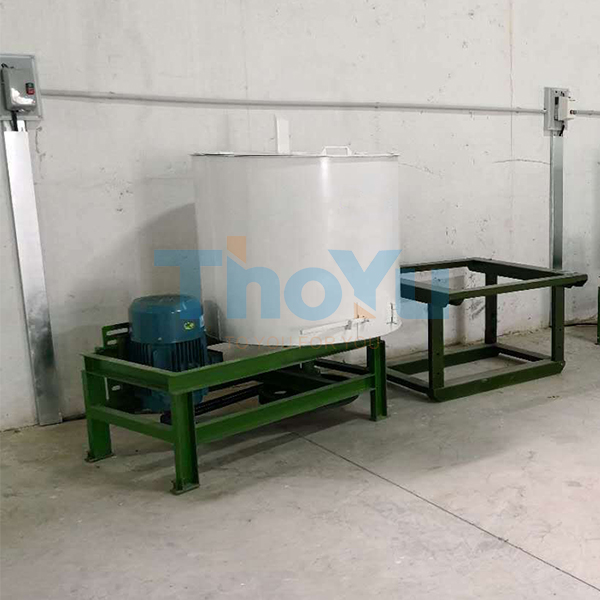
In the woodworking industry, the quality of adhesive mixtures significantly influences the durability and aesthetics of composite wood products. The vertical wood glue mixer developed by Zhengzhou Tuoyu Electromechanical Equipment Co., Ltd. addresses this challenge by delivering uniform and efficient mixing of sawdust and glue. This article explores the core technologies behind this equipment, emphasizing the design of propeller blades, speed control systems, and material flow optimization. The discussion also covers critical process parameters such as the 85:15 sawdust-to-glue ratio and adjustments required when using different adhesives like UF (Urea-Formaldehyde) and PF (Phenol-Formaldehyde) glues.
Central to the mixer’s performance is its spiral propeller blade design, engineered to create optimal turbulence and prevent material stratification. The blades feature a 45° spiral angle combined with variable pitch increments, allowing gradual acceleration of the viscous glue and particulate sawdust. This innovation ensures that the adhesive fully penetrates the sawdust, resulting in a homogenous mix without dead zones. Tested under variable loads, the mixer achieves uniformity consistency exceeding 98% within an average mixing time of 6–8 minutes.
Another critical factor is the adjustable rotational speed, managed via a variable frequency drive (VFD) system which enables speed modulation within 60 to 180 RPM. This flexibility allows operators to fine-tune stirring intensity depending on glue viscosity and sawdust moisture content—for example, UF glue requires a slower speed (around 80–100 RPM) to prevent shear-induced polymer degradation, whereas PF glue tolerates higher speeds (up to 150 RPM) due to its more robust chemical structure.
The design of the vertical mixing chamber promotes a controlled, multidirectional flow path. Sawdust enters from the top, while glue is injected laterally, mixing intensively in the central region before descending. This flow dynamic prevents accumulation at vessel bottoms, a common issue in traditional mixers that leads to inconsistent bonding. Computational fluid dynamics (CFD) simulations validate this approach, showing a 15% increase in mixing efficiency compared to horizontal mixers of similar capacity.
Research and field tests converge on the 85:15 weight ratio of sawdust to glue as ideal for maximizing adhesive strength and minimizing glue wastage. At this ratio, the glue sufficiently coats particle surfaces and fills voids, optimizing the mechanical interlock and chemical bonding. Deviations from this parameter have shown increases in voids or glue pooling, causing delamination or brittle failure under stress.
Pro Tip: Maintaining the 85:15 ratio coupled with a mixing time between 6 to 8 minutes under controlled speed conditions assures consistent bonding quality, enhancing final product durability by up to 20% in comparative lifecycle testing.
Urea-Formaldehyde (UF) glue is widely used for indoor wood products due to its fast curing and cost-effectiveness, but its lower water resistance demands precise temperature control (ideally 20-25°C) and moderate stirring to avoid excessive air entrapment. Phenol-Formaldehyde (PF) glue, though pricier and slower to cure, offers superior moisture and heat resistance, allowing higher stirring speeds and slightly longer mixing durations without compromising bond integrity.
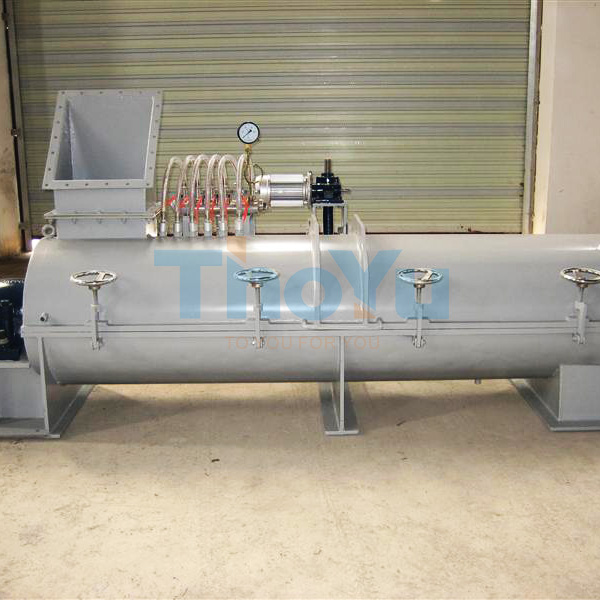
Achieving peak performance with the vertical mixer involves calibrating several parameters:
Real-time monitoring sensors embedded in the mixer aid operators by providing feedback on torque load and thermodynamics, enabling dynamic adjustments.
A leading panel manufacturer integrated the Tuoyu vertical mixer into their production line, leading to a 15% rise in throughput and a 12% decrease in adhesive costs due to the optimized mixing. The homogenous glue-sawdust blend resulted in fewer product defects and improved mechanical strength tested under ISO 9001 standards. After 6 months, reported downtime related to mixing irregularities dropped by nearly 40%, bolstered by Tuoyu’s robust after-sales technical support.
Question: What is the optimal rotational speed range for mixing PF glue to avoid adhesive degradation?
Answer: C. 120–150 RPM
Correct adjustment of speed according to glue type ensures optimal adhesion and prolongs equipment life.