
In high-inventory operations, storage density is rarely limited by square meters alone. More often, the real bottleneck is the stacking ceiling: load stability, pallet integrity, forklift handling, and how consistently pallet dimensions fit racking and automation. Lightweight pallets—especially newer bio-based material pallets—are increasingly evaluated as a practical lever to improve cube utilization, reduce damage, and support standardized, automated warehousing.
Warehouses under SKU expansion and shorter replenishment cycles often see the same pattern: racks fill up, aisles become congested, and outbound staging consumes valuable slots. Even when racking capacity looks sufficient on paper, real-world utilization drops due to pallet variability, broken deck boards, and conservative stacking policies designed to prevent collapse or product damage.
This is where pallet choice becomes a measurable variable. A pallet that is lighter, dimensionally stable, and less prone to splintering can enable higher safe stacking, more reliable automated handling, and fewer “buffer rules” that quietly waste vertical space.
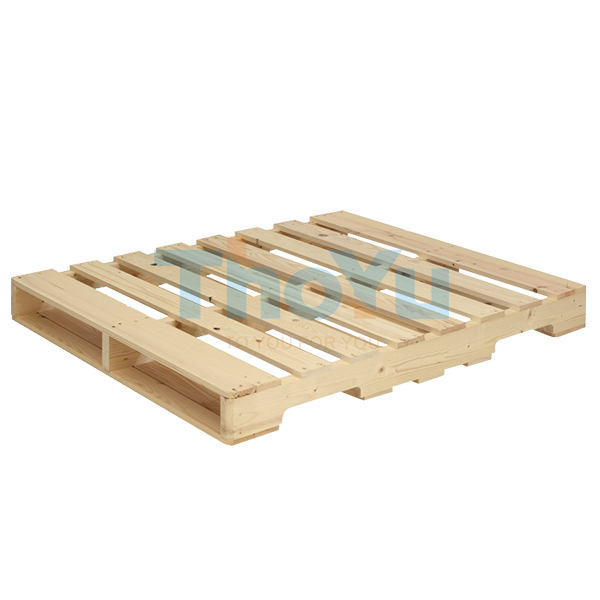
Buyers typically compare pallets by unit cost, but space utilization depends on performance metrics that drive how high—and how safely—goods can be stacked. Below is a reference comparison using common logistics specifications. Actual results vary by design (deck thickness, runner layout, reinforcements), moisture exposure, and handling intensity.
| Metric (Typical Range) | Bio-Based Lightweight Pallet | Traditional Wood Pallet | Why It Matters for Warehouse Space |
|---|---|---|---|
| Pallet weight (48"x40" / 1200x1000 typical) | 8–14 kg | 18–28 kg | Lower tare can increase payload efficiency and reduce handling fatigue and impact events. |
| Dynamic load (forklift movement) | 900–1,500 kg | 800–1,200 kg | Stable dynamic behavior reduces emergency “stack height limits” set after incidents. |
| Static load (floor stacking) | 2,500–4,500 kg | 2,000–3,500 kg | Supports higher floor stacks when goods allow, improving cube utilization. |
| Dimensional stability (humidity sensitivity) | Low (typically consistent) | Medium–High (warping, swelling possible) | Consistent dimensions improve rack fit and reduce jams in conveyors/ASRS. |
| Damage rate in circulation (rough handling scenarios) | 1–3% per cycle band | 3–8% per cycle band | Fewer broken pallets means fewer “do not stack” exceptions and rework zones. |
| Typical reuse cycles (closed-loop) | 50–150 cycles | 10–30 cycles | More consistent pallet fleet quality supports stable stack policies and automation uptime. |
| Hygiene / splinter risk | Low (no splinters, no nails) | Higher (splinters, protruding nails) | Less product damage and fewer safety incidents that trigger conservative handling rules. |
Note: In export workflows, wood pallets may require ISPM 15 compliance, while many non-wood alternatives simplify quarantine steps depending on destination rules.
When pallet integrity is predictable, warehouse teams can tighten safety margins. In many operations, moving from variable wood pallets to consistent lightweight pallets can unlock an additional 10–25 cm in safe stacking height per load unit due to reduced wobble and fewer broken deck boards. Across multi-level racking, small gains compound into meaningful capacity.
Damaged pallets create exceptions: re-palletizing, stretch wrap reinforcement, quarantine zones, and “floor-only stacking” rules. A reduction in pallet damage rate—from, for example, 6% to 2% in a busy loop—can quickly reduce rework touches and keep lanes clear, improving both space and throughput.
Nail-free and splinter-free designs reduce product scuffs and worker injuries, while consistent fork entry improves handling speed. Many facilities see measurable improvements in palletizing consistency, which matters when WMS rules depend on standardized load geometry.
The most common mistake is adopting “one pallet for everything.” A better approach is to classify SKUs by weight, fragility, handling frequency, and route complexity—and then match pallet structure accordingly.
High-turnover FMCG / e-commerce consolidation
Prioritize: lightweight, consistent dimensions, clean surface. Nail-free one-piece designs are often preferred to minimize snagging and speed up repetitive handling.
Heavy industrial parts / dense loads
Prioritize: verified dynamic load rating, runner reinforcement, and racking compatibility. Confirm performance under repeated forklift impacts and corner load stress.
Export shipments with strict compliance workflows
Prioritize: documentation, consistent quality, and destination requirements. If using wood, ensure treatment and marking processes are stable to avoid customs delays.
Smart warehouses rely on predictable physical interfaces. If pallet height, entry points, or deck flatness vary too much, automated storage and retrieval systems (AS/RS), conveyors, and pallet shuttles must slow down—or stop. Standardization is not just a procurement policy; it is an automation enabler.
In practice, companies improving pallet standardization often report: fewer conveyor stoppages, lower sensor false alarms, and more stable cycle times. Even in semi-automated sites, uniform pallets support smoother scanning, easier load profiling, and cleaner WMS rule execution.
Sustainability targets are becoming operational KPIs, not just brand statements. Lightweight solutions reduce transport emissions through lower tare weight, while longer service life lowers replacement frequency. At the same time, many companies are rethinking wood pallet strategies—moving toward more consistent manufacturing, tighter moisture control, and more standardized footprints to reduce total system waste.
The key shift is that pallet selection is no longer a “warehouse consumable” decision. It’s a system design decision that impacts space utilization, automation compatibility, damage rate, labor rhythm, and overall resilience.
If your operation is balancing high inventory pressure with automation upgrades and sustainability goals, pallet manufacturing and structural consistency become the foundation.
Learn about Zhengzhou Tuoyu single-mold pressed wood pallet machine and start a new chapter of efficient green warehousing