

You’re packing an urgent export order. Everything looks ready—until customs flags your wooden pallet and your container is held. In many lanes, that “small” pallet issue turns into missed delivery windows, storage charges, and a damaged buyer relationship.
This guide walks you through the ISPM 15 compliance workflow in plain, operational steps: how to identify heat treatment (HT) marks, what to check on pallet construction, what brokers and inspectors actually look for, and how to avoid the common mistakes that trigger delays.
The “One Pallet” Incident: Why ISPM 15 Fails Hurt More Than You Think
A common real-world scenario: one mixed shipment uses compliant pallets—except for two replacement pallets sourced locally the night before pickup. They look identical. But the stamp is missing or unreadable. At destination, the inspection officer isolates the load, requests proof, and you’re forced into re-export, fumigation, or pallet destruction depending on the country’s policy.
From industry benchmarks, a customs hold can easily add 3–10 days in lead time, plus secondary impacts like demurrage, storage, and urgent repacking costs. The biggest loss is often invisible: your buyer’s confidence.

ISPM 15 in One Minute: What It Actually Regulates
ISPM 15 (International Standards for Phytosanitary Measures No. 15) is designed to stop pests moving across borders via solid wood packaging material (SWPM) such as pallets, crates, and dunnage. Most enforcement actions come down to one question: Can your wood packaging clearly prove it was treated and marked correctly?
HT vs MB: How to Read the Mark (And What Makes It “Invalid”)
In daily operations, you’ll mainly encounter HT (Heat Treatment). MB (Methyl Bromide fumigation) appears less often due to restrictions and buyer sustainability policies. Your goal is not to memorize the standard—it’s to reliably spot what customs will accept.
| Item | HT (Heat Treated) | MB (Methyl Bromide) | Customs Risk Notes |
|---|---|---|---|
| What it means | Heated to a core temperature (commonly referenced: 56°C for 30 minutes) | Fumigated with MB | HT is widely preferred; MB can trigger ESG objections and import restrictions |
| Stamp code | HT | MB | Missing/unclear code = treated status can’t be proven |
| Mark legibility | Must be permanent, readable, not hand-drawn | Same requirement | Smudged ink, paint overspray, or partial marks often fail inspection |
| Common failure | Stamp only on removable block or on one side that’s not visible after loading | Using old stock pallets without verifying treatment/mark authenticity | Even if wood was treated, a bad mark is treated as non-compliant |
Quick rule for your team: if the ISPM 15 mark isn’t clearly visible in seconds, assume it will become a problem at some point in the journey.
Pallet Structure & Wood Rules: What People Miss in the Warehouse
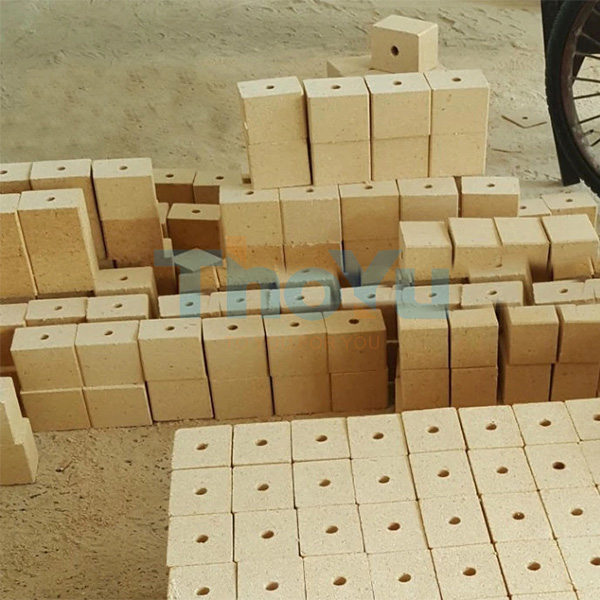
ISPM 15 applies to solid wood packaging material above 6 mm thickness. That means your pallet deck boards, stringers/blocks, and many braces/dunnage components are in scope. Processed wood products (like plywood, OSB, MDF) are usually considered exempt because pests don’t survive the manufacturing process—but don’t assume: always verify with your packaging supplier documentation and the destination’s enforcement habits.
Construction checks you can do in 2 minutes
- Confirm the mark includes IPPC symbol, country code, producer/treatment ID, and HT (or MB).
- Check boards for obvious bark or live-edge pieces that look untreated.
- Look for repairs: swapped boards often come from non-certified stock.
- Ensure marks aren’t hidden by wrap, labels, or corner protectors.
Why nail patterns and “minor” damage matter
Loose deck boards, protruding nails, and broken blocks don’t just risk cargo damage—they often lead to on-the-spot pallet swapping by a forwarder or warehouse. That last-minute swap is a top cause of non-compliance because the replacement pallet’s stamp is unknown, incomplete, or missing.
If you ship to markets with stricter quarantine practices (commonly cited: Australia/New Zealand lanes, and certain agricultural-sensitive ports), your tolerance for “almost compliant” should be zero.
Export Pre-Check Workflow: A Practical, Repeatable Routine
Your ISPM 15 “Gate Check” (use before the truck arrives)
- Supplier verification: confirm pallets come from an approved provider; request treatment/traceability info for your files.
- Physical stamp audit: spot-check at least 10% of pallets (or minimum 10 pallets per lot). If you find one bad mark, expand the check.
- Repair control: if pallets were repaired, confirm repairs were made under compliant procedures and re-marked as required.
- Load plan: place at least one visible stamp outward; avoid covering stamps with stretch wrap layers.
- Photo evidence: take quick photos of stamps for your shipment file—especially for first-time buyers or strict lanes.
- Broker alignment: notify your customs broker/forwarder if any wood packaging is non-standard (dunnage, crates, mixed materials).
This workflow isn’t about paperwork for the sake of it. It’s about reducing the probability of a single “unknown pallet” turning into a multi-day delay.
The Most Common ISPM 15 Mistakes (And How You Avoid Them)
Mistake #1: “The pallet was treated… we just don’t have the stamp.”
Customs typically enforces what they can verify. Without a clear ISPM 15 mark, treatment is hard to prove at inspection speed. Your fix: refuse unstamped pallets and set a warehouse rule that any replacement pallet must be from pre-approved compliant inventory.
Mistake #2: Repairs using random boards
A single untreated repair board can compromise the whole unit in the eyes of quarantine officers. Your fix: establish a repair quarantine zone—repairs only with verified compliant parts, logged by lot.
Mistake #3: Dunnage and bracing forgotten
Teams check pallets but forget wooden dunnage added for stabilization. Your fix: treat dunnage as a line item in your packing SOP—either compliant SWPM or switch to non-wood alternatives where possible.
Traditional Wood Pallets vs Bio-Based Pallets: Where Compliance Meets Efficiency
If you’re exporting frequently, you’re not only managing compliance—you’re managing repeatability. That’s why some shippers evaluate bio-based or alternative pallets (depending on load rating and lane requirements) to reduce phytosanitary risk and simplify SOPs.
| Comparison | Traditional Wood Pallet (ISPM 15) | Bio-based / Alternative Pallet (varies) | Operational takeaway |
|---|---|---|---|
| Phytosanitary inspections | Stamp must be valid and visible | Often avoids ISPM 15 scope if not SWPM | Lower chance of stamp-related holds |
| Consistency | Quality varies by supplier/repairs | More standardized dimensions | Easier SOPs for high-volume exporters |
| Damage rate | Can break; repairs introduce compliance risk | Depends on design; some resist moisture better | Fewer emergency swaps = fewer compliance surprises |
| ESG perception | Neutral to positive if responsibly sourced | Often marketed as sustainability-forward | Can support buyer sustainability narratives |
You don’t need to switch materials to be compliant—but if your shipments face repeated inspections or you manage multiple warehouses, standardizing your pallet policy can remove an entire category of avoidable delays.
Broker & Documentation Reality Check: What Gets Reviewed at the Border
Most shipments don’t require you to attach an “ISPM 15 certificate” for every pallet—enforcement is largely mark-based and inspection-based. However, when an officer questions compliance, having a simple traceability file (supplier confirmation + photos + internal check record) can speed up decisions and reduce back-and-forth.
Align with your forwarder and customs broker on one key point: who is responsible for pallet replacement if a pallet is rejected during handling. If this isn’t defined, the last-minute fix may become your compliance risk.
Stop Guessing: Download Your Free ISPM 15 Self-Check Toolkit
If you want a repeatable process your warehouse can follow, grab the downloadable toolkit: a one-page gate checklist, stamp verification notes, a photo log template, and a “red flag” list you can post at the packing station.
If your next export load uses mixed pallets, repaired units, or extra wooden bracing, run the gate check first—because the fastest time to fix an ISPM 15 problem is before the container door closes.