Key Parameters of Industrial Ring-Type Glue Mixers: A Technical Guide to Boost Woodworking Efficiency
31 03,2026
Technical knowledge
How to choose an industrial ring-type glue mixer? This article offers an in-depth analysis of essential parameters such as capacity, mixing speed, structural design, and automation level, illustrating their real-world impact on woodworking production efficiency. Through comparative data and case studies, it helps manufacturers scientifically assess equipment performance against specific needs. Additional insights on safety, energy consumption, and after-sales support provide a comprehensive perspective to guide enterprises toward cost-effective, reliable purchasing decisions.

Industrial Ring-Type Glue Mixer Key Parameters Explained: A Technical Guide to Boost Woodworking Efficiency
The woodworking industry increasingly relies on precision and efficiency in glue mixing processes to ensure product quality and operational productivity. Selecting the right industrial ring-type glue mixer is essential to meet the rigorous demands of wood processing enterprises. This article by ThoYu delves into the critical parameters—capacity, mixing speed, structural design, and automation level—that directly affect production efficiency and glue quality. Balanced with real-world data and applications, this comprehensive guide aids businesses in making informed, data-driven equipment choices.
Core Parameter Analysis: Capacity, Mixing Speed, Structural Design, and Automation
Understanding each technical parameter’s role enables enterprises to align equipment functions with their production goals:
- Capacity: Typically ranging from 50 to 500 liters, capacity determines the volume of glue mixture processed per cycle. A mismatch can either bottleneck production or waste resources.
- Mixing Speed: Varying between 30 to 120 RPM, this parameter influences glue uniformity and processing time. Higher speeds often improve homogeneity but may increase wear and energy use.
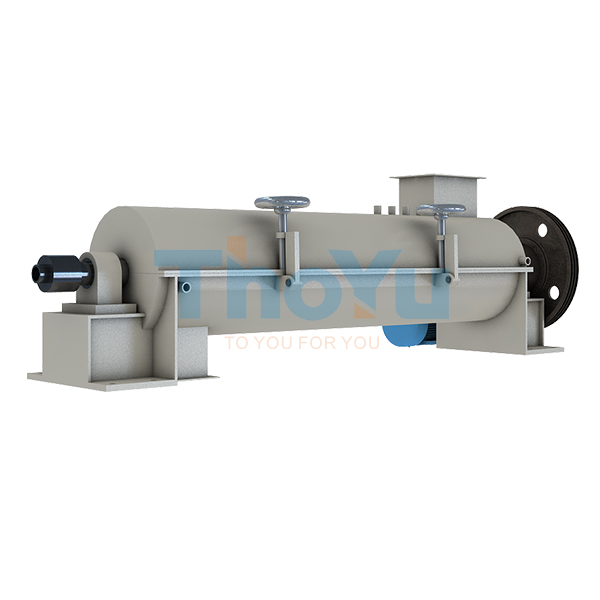
- Structural Design: Robust ring-shaped mixing blades and optimized tank geometry ensure thorough blending while minimizing downtime for cleaning and maintenance.
- Automation Level: From manual to fully automated touchscreen-controlled systems, automation impacts labor costs, precision in ingredient dosing, and repeatability of mixing cycles.
Performance Comparison: Data-Driven Insights
Comparative analysis across various industrial ring-type glue mixer models demonstrates notable differences in throughput, energy efficiency, and product consistency.
| Model |
Capacity (L) |
Mixing Speed (RPM) |
Hourly Output (kg) |
Energy Consumption (kWh) |
Glue Uniformity Score* |
| Ty-RTM-100 |
100 |
60 |
300 |
4.5 |
8.7 |
| Ty-RTM-250 |
250 |
85 |
720 |
10.2 |
9.2 |
| Ty-RTM-400 |
400 |
100 |
980 |
15.3 |
9.6 |
*Glue Uniformity Score based on standardized lab tests with a scale of 1-10 (higher is better)
Application Scenario Analysis for Optimized Parameter Matching
Woodworking covers diverse processes, and each demands tailored mixer configurations to optimize performance:
- Solid Wood Processing: Smaller batch sizes (~100L) with moderate mixing speed (50-70 RPM) maintain glue strength without excessive shear damage.
- Manufactured Wood Panels (Particle, MDF): Larger capacity (≥250L) and higher mixing speeds (80-100 RPM) ensure consistent glue dispersion for uniform board quality.
- Specialty Laminates: High automation with precision dosing controls reduces human error while supporting complex formulations.
Choosing equipment without considering specific production types often leads to inefficiencies or compromised product integrity. For instance, using a low-capacity mixer in a high-volume setting can cause operational delays exceeding 15%, while excessive speeds in delicate glue formulas risk compromising bonding strength.
Non-Technical Factors: Safety, Maintainability, and Service Excellence
Beyond raw performance, these factors critically affect Total Cost of Ownership (TCO) and long-term satisfaction:
- Safety Features: Emergency stop buttons, robust guarding, and compliance with EN ISO 12100 ensure operator protection.
- Maintenance Convenience: Modular components and accessible clean-in-place (CIP) systems minimize downtime, supporting rapid turnarounds.
- After-Sales Support: Responsive technical assistance and comprehensive warranty coverage prevent costly production halts.
Evidence from user feedback reveals that prioritizing these aspects reduces failure incidents by up to 20% and maintenance labor hours by 30%, generating measurable productivity gains over equipment lifecycle.
Incorporating a holistic evaluation framework that balances core mechanical parameters with pragmatic operational criteria empowers woodworking companies to maximize return on equipment investments.