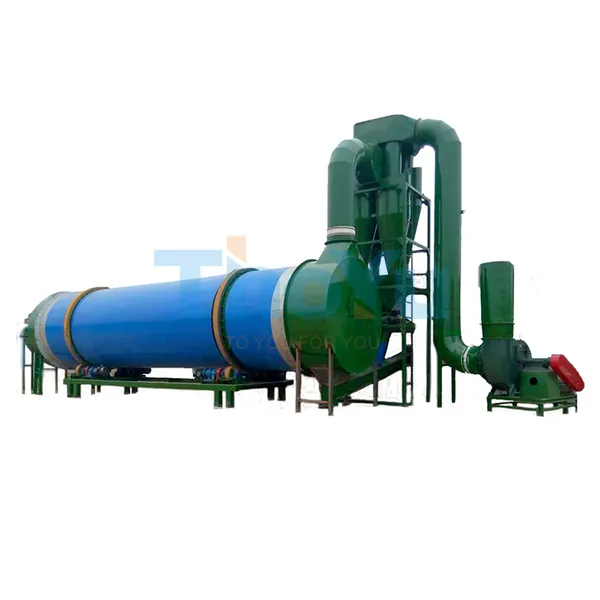
Facing uneven drying when processing wood with your drum dryer? You’re not alone. Whether it’s pine, cedar, or eucalyptus, inconsistent moisture removal leads to cracking, warping, and increased energy costs. Understanding how to scientifically adjust your drum dryer's rotational speed and hot air temperature can dramatically improve quality and efficiency. This guide dives deep into the parameters and offers actionable solutions tailored to different wood species, helping you elevate your drying process with real, implementable steps.
Common issues you might be experiencing include uneven drying, excessive energy consumption, and compromised fiber integrity. These problems often arise due to improper drum rotation speed, incorrect hot air temperature settings, or insufficient residence time. Each parameter influences how heat penetrates and evaporates moisture within the wood, but when misaligned, they can exacerbate defects rather than prevent them.
The drying efficiency of a drum dryer hinges on three main elements:
Wood species vary considerably in density, fiber structure, and moisture content, meaning each responds differently to drying parameters:
| Wood Species | Density (kg/m³) | Ideal Hot Air Temp (°C) | Recommended Drum Speed (RPM) | Key Drying Traits |
|---|---|---|---|---|
| Pine | 500 - 560 | 70 - 85 | 5 - 7 | Moderate density; prone to uneven drying; risk of checking |
| Cedar | 380 - 420 | 60 - 75 | 6 - 8 | Softwood; sensitive to temperature spikes; surface checking common |
| Eucalyptus | 720 - 900 | 85 - 95 | 4 - 6 | High density; requires slower drying to avoid warping and cracking |
Your workflow should incorporate real-time moisture content assessment to adjust drum speed and temperature proactively:
Implementing sensors and monitoring systems to track moisture variation can enable automated drum dryer adjustments, raising drying uniformity levels by an estimated 15-20%.
You should be aware of the following defects and their typical causes:
| Defect | Cause | Mitigation |
|---|---|---|
| Cracking (Checking) | High temperature or rapid moisture loss | Gradual temperature ramp, controlled drum speed |
| Surface Hardening | Excessive heat at drying start | Start with lower heat, increase progressively |
| Warping / Deformation | Uneven drying rates, improper residence time | Uniform parameter control, moisture monitoring |
A mid-sized sawmill using ThoYu’s rotary drum drying technology implemented tailored parameter settings based on wood species and moisture trends. By adjusting drum speed between 5-7 RPM and modulating hot air temperature from 65°C to 85°C for pine batches, they reached a 25% increase in throughput and cut energy consumption by approximately 15%. Notably, wood defects dropped by nearly 40% compared to baseline operations.
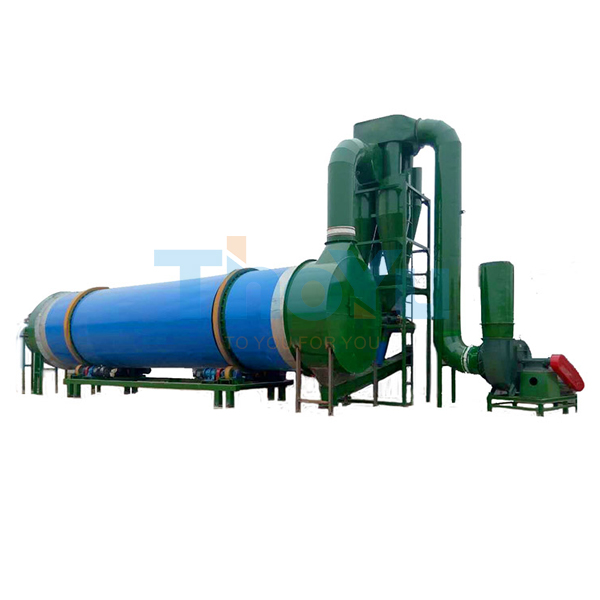
This practical data highlights how scientific tuning of parameters can turn a common drying bottleneck into a competitive advantage.
Applying consistent drying procedures ensures repeatable quality. ThoYu recommends:
These steps create a reliable foundation where your drying process continually adapts and improves.