

Keep impurities out of the cutting zone
Mud, stones, and metal scraps turn “moisture tolerance” into unnecessary wear. Basic sorting and magnetic separation can extend blade life and keep the screen from being damaged by impact.

In straw-to-fuel and biomass pellet production, “dry first, then crush” is often treated as an unbreakable rule. Yet in real-world recycling projects, many operators quietly discover the opposite: with the right heavy-duty crusher architecture, certain crop residues can be crushed first without pre-drying—and overall cost per ton can drop.
This article explains the engineering logic behind that approach through the lens of Zhengzhou Tuoyu Electromechanical Equipment Co., Ltd. and its self-developed heavy-duty wood crusher series—focusing on structure, blade configuration, and material-flow dynamics that enable high-throughput, low-energy crushing even when moisture is not “ideal.”
Practical note: “No drying” does not mean “any moisture is fine.” It means pre-drying is not mandatory for crushing under many common straw moisture conditions, especially when the crushing step is designed to avoid clogging, heat buildup, and unstable feeding.
For crop straw and similar agricultural residues (wheat straw, rice straw, corn stover, cotton stalks), drying is usually introduced for one reason: reduce moisture before densification. But densification requirements and crushing requirements are not the same. Crushing is about size reduction and flow stability; pelletizing is about binding and final moisture range.
Heavy-duty crusher systems that can accept straw at moderate moisture shift drying downstream to where it matters most: right before pelletizing or briquetting—often with better control and fewer stoppages.
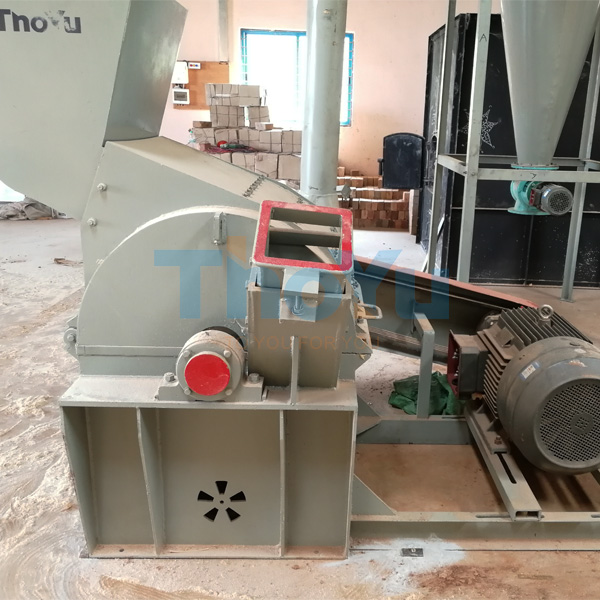
Straw behaves differently from hardwood. It’s fibrous, springy, and prone to bridging. When moisture rises, it becomes tougher and more elastic—often the reason conventional crushers clog. The heavy-duty wood crusher approach works when three technical elements align: geometry (structure), cutting mechanics (tooling), and flow kinetics (material movement).
In moisture-tolerant crushing, the real enemy is not water—it’s packing density. Wet straw can compress into a mat that resists cutting, then turns into a self-feeding brake. Tuoyu’s heavy-duty architecture emphasizes:
The objective is simple: keep material moving. Once flow becomes intermittent, motor load spikes, and wet straw quickly becomes a blockage.
Many failures in wet-straw crushing come from tooling that relies on impact and tearing. Tearing works on brittle dry material; it performs poorly on elastic fibers. A heavy-duty wood crusher optimized for straw typically applies:
In practice, this means a straw bundle is segmented quickly into manageable lengths, instead of being whipped into ropes that wrap and choke the rotor.
When straw moisture is moderate, friction rises and the material tends to stick. A stable system treats flow as a dynamic problem: the rotor, air movement, and discharge design cooperate so fibers don’t linger long enough to compact.
| Design factor | What it improves | Why it matters for moist straw |
|---|---|---|
| Rotor inertia & torque reserve | Smooth load fluctuations | Moist batches arrive with uneven density; torque reserve prevents stalling. |
| Discharge resistance control | Shorter residence time | Lower residence time reduces packing and heat accumulation. |
| Feeding stability (mechanical or controlled) | Consistent particle size | Overfeeding is a leading cause of wet-fiber bridging and overload trips. |
The result is a crushing loop that behaves predictably: steady amperage, fewer emergency stops, and a cleaner outlet—even when straw moisture is not perfectly uniform.
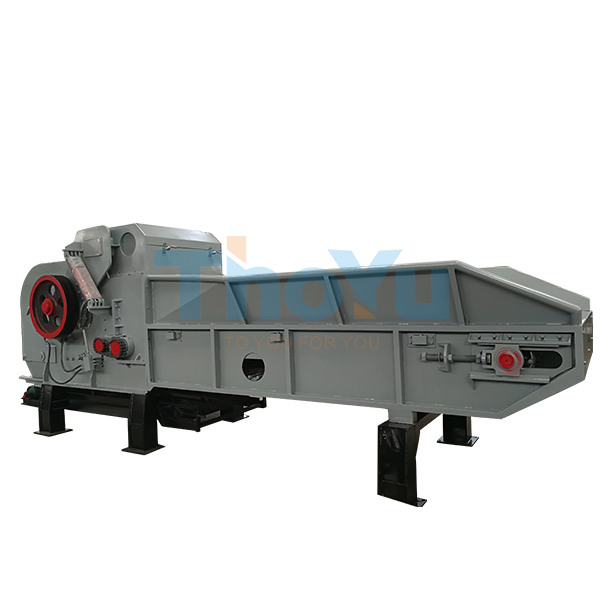
In many straw resource utilization projects, incoming moisture typically fluctuates with harvest time and storage conditions. For example, wheat straw in covered storage may sit around 12–18% moisture, while field-collected corn stover can arrive at 18–30%. In these ranges, a heavy-duty crusher designed for flow stability can often crush first, then let the drying step work on a more uniform, higher-surface-area material.
The following ranges are commonly used by operators as a starting point. Exact limits depend on straw type, contamination level, and target particle size:
| Material condition | Typical moisture range | Crushing recommendation | Operational focus |
|---|---|---|---|
| Covered, relatively clean straw | 12–18% | Crush directly | Stable feeding; blade sharpness |
| Mixed straw with moderate moisture variation | 18–25% | Crush first, dry later | Avoid overfeeding; monitor motor load |
| Wet, sticky, high-impurity batches | 25–35%+ | Pre-sort / controlled pre-dry recommended | Remove mud, stones; protect blades and screen |
When crushing happens before drying, many plants also report smoother dryer performance because the material has more exposed surface area and fewer “rope-like” bundles that resist heat transfer.
In a typical agricultural waste recycling line supporting biomass fuel preparation, operators care about two numbers: kWh per ton and hours of uninterrupted operation. Where a conventional setup may require pre-drying to avoid clogging, moisture-tolerant crushing aims to keep the line moving with fewer forced stops.
In one regional straw utilization program (multi-village collection, seasonal variability), a heavy-duty crusher configured for straw was introduced to reduce dryer dependency during peak intake weeks. Reported outcomes included:
While exact numbers vary by region and fuel type, the pattern is consistent: process stability becomes the real cost saver—because every jam, reverse cycle, or emergency shutdown carries hidden labor and opportunity costs.
If a line produces 10 tons/hour, even a conservative 20 minutes/day of avoided downtime equals ~3.3 tons/day recovered capacity. Over a 90-day busy season, that’s roughly 300 tons of additional throughput—often outweighing marginal differences in single-machine power consumption.
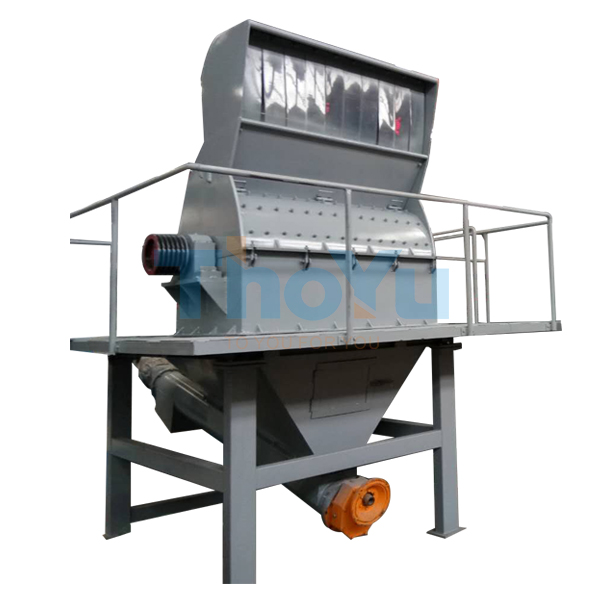
Plants that succeed with no pre-drying usually follow a few disciplined practices. These are not complicated, but they are decisive—especially when raw material moisture is inconsistent.
Mud, stones, and metal scraps turn “moisture tolerance” into unnecessary wear. Basic sorting and magnetic separation can extend blade life and keep the screen from being damaged by impact.
Most wet-straw jams are triggered by overfeeding. A steady, metered feed helps the rotor maintain cutting rhythm and prevents sudden compaction. Operators often use motor load as a simple real-time indicator.
For biomass pellets, many lines target a straw particle length commonly around 5–20 mm depending on formulation and die design. A realistic target reduces recirculation and keeps energy use predictable.
Dull edges increase tearing and wrapping—exactly what moist straw exploits. A simple schedule (inspection frequency tied to tonnage and impurity level) often prevents the “mystery jams” that appear after long runs.
A moisture-tolerant heavy-duty crusher is not a promise that every wet load will run perfectly. Many plants still pre-dry or pre-condition when straw arrives soaked by rain, mixed with soil, or packed into dense bales with poor airflow.
For biomass pellet production, straw recycling, and agricultural residue utilization, the right crushing design can shift drying to where it delivers the most value—while improving daily stability. Zhengzhou Tuoyu’s heavy-duty wood crusher solutions are engineered around flow reliability, torque reserve, and straw-friendly cutting mechanics.
Explore Tuoyu Heavy-Duty Wood Crusher for Crop Straw ProcessingTypical inquiry details that help engineers respond faster: material type, target output (t/h), desired particle size, moisture range, and contamination level.