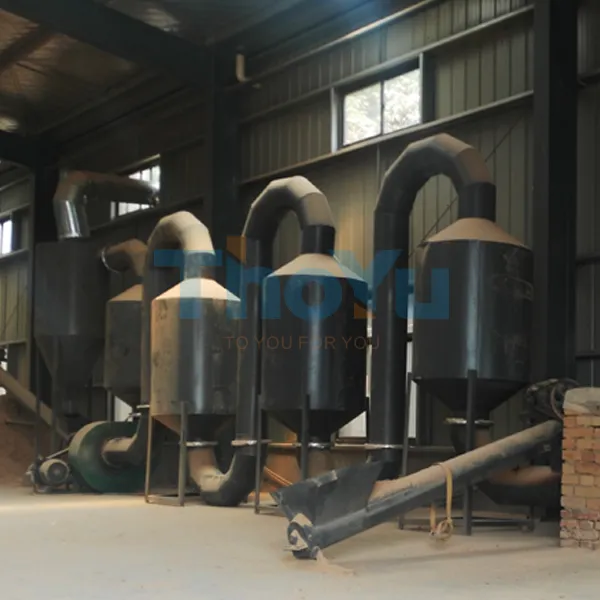
Precise Control of Wood Moisture Content from 12% to 6%-8% Using Airflow Drying Technology

24 03,2026
ThoYu
Technical knowledge
This article explores the principles of airflow drying technology and its precise control over wood moisture content reduction from 12% to 6%-8%. Key process parameters such as drying temperature, airflow velocity, and residence time are analyzed to understand their impact on moisture regulation. Practical insights include the drying characteristics of typical materials like sawdust, wood chips, and rice husks, alongside how automated feeding systems optimize energy efficiency. Case studies demonstrate how this approach enhances the stability of block extrusion processes and improves final product quality. ThoYu’s airflow drying solutions provide wood processing enterprises with data-driven strategies to master moisture control and elevate production performance.
Graph showing relationship of drying temperature, air velocity and residence time with wood moisture content reduction

Understanding Airflow Drying Technology for Precise Wood Moisture Content Control

In the wood processing industry, achieving the ideal moisture content in raw materials such as sawdust, wood chips, and rice husks is critical for product quality and manufacturing efficiency. ThoYu's airflow drying technology has emerged as a reliable solution to accurately reduce wood moisture content from approximately 12% down to a stable target range of 6%-8%. This article explores the core principles behind airflow drying, key process parameters, and real-world implementations that empower wood manufacturers to optimize their drying processes with data-driven precision.

Fundamental Principles of Airflow Drying in Wood Processing

Airflow drying technology operates by passing hot air uniformly through wood-based materials, facilitating moisture evaporation while maintaining structural integrity. The convective heat transfer mechanism enables rapid and energy-efficient drying, suitable for heterogeneous materials like sawdust and wood chips. Compared to conventional drying methods, airflow drying offers better control, faster cycle times, and reduced thermal damage risks.

Critical Process Parameters Affecting Moisture Reduction

Successful moisture content adjustment depends on three interrelated key parameters:

  • Drying Temperature: Operating typically between 80-120°C, temperature directly influences evaporation rates. Temperatures too low slow drying, whereas excessively high settings risk charring or degrading wood quality.
  • Airflow Velocity: Optimal wind speeds (commonly 3-6 m/s) ensure even heat distribution and prevent material clumping, enhancing drying uniformity.
  • Residence Time: The duration wood particles remain exposed to drying air, commonly ranging from 8 to 15 minutes based on feedstock type and moisture load, is crucial for achieving target moisture levels without over-drying.
Industry Insight: Manufacturers report that precise calibrations of these parameters can reduce energy consumption by up to 20%, while maintaining consistent output moisture, crucial for downstream processes such as block extrusion.

Tailoring Drying Strategies for Various Wood Materials

Wood-based materials exhibit distinct drying behaviors:

  • Sawdust: Fine particle size requires moderate airflow velocities to avoid blow-through yet ensure thorough moisture removal.
  • Wood Chips: Larger, denser particles demand longer residence times and slightly higher temperatures for uniform drying.
  • Rice Husks: Lower bulk density and moisture content enable shorter drying cycles but require careful temperature control to prevent combustion risks.

Automatic feeding and discharging systems integrated with moisture sensors enable real-time feedback control, adjusting drying parameters dynamically to maintain desired moisture targets across heterogeneous batches.
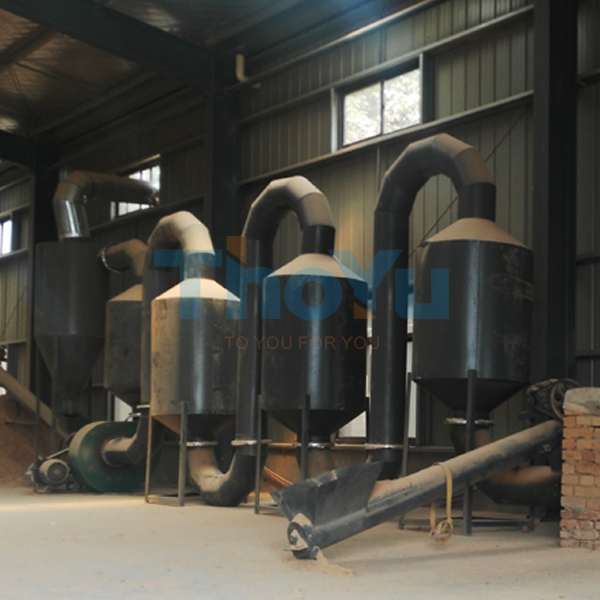
Graph showing relationship of drying temperature, air velocity and residence time with wood moisture content reduction

Case Study: Enhancing Production Efficiency via Precise Moisture Control

A mid-sized wood processing facility implemented ThoYu's airflow drying technology, configuring drying temperatures at 95°C, an airflow velocity of 4 m/s, and a residence time of 12 minutes. Over six months, they consistently achieved moisture content within the 6%-8% range from an initial 12%, which translated into a 30% improvement in extrusion line stability and product conformity rate.
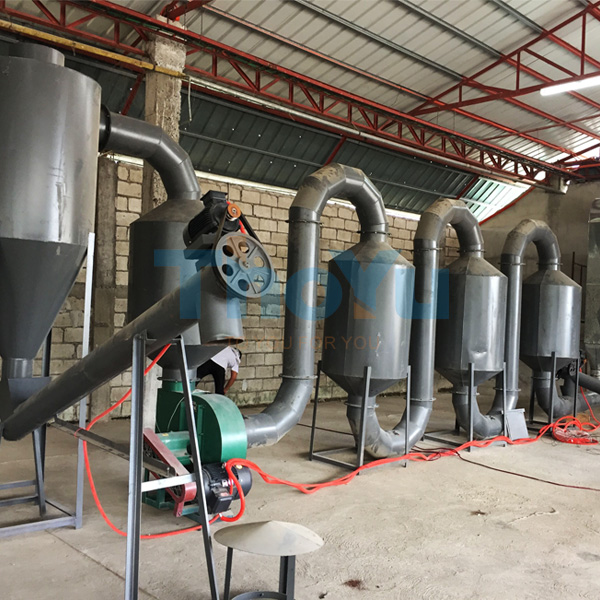
Wood processing plant using automated airflow drying system to improve moisture control

Impact of Moisture on Block Extrusion Quality

Moisture content directly affects the compressibility and adhesion during the block extrusion process. Materials dried within the ideal 6%-8% moisture range exhibit fewer fractures, improved density uniformity, and enhanced surface finish. Conversely, over- or under-dried feedstocks often lead to machine stoppages and increased rejection rates—a costly problem for any wood product manufacturer.

Maintenance and Energy Efficiency Considerations

Optimizing energy use is integral to sustainable operations. Regular cleaning of air filters, calibration of temperature sensors, and timely replacement of moving parts help maintain system efficiency above 90%. The integration of automated control loops also prevents unnecessary energy expenditure by adjusting drying cycles to actual material conditions. Manufacturers adopting these best practices report up to 15% energy savings annually.
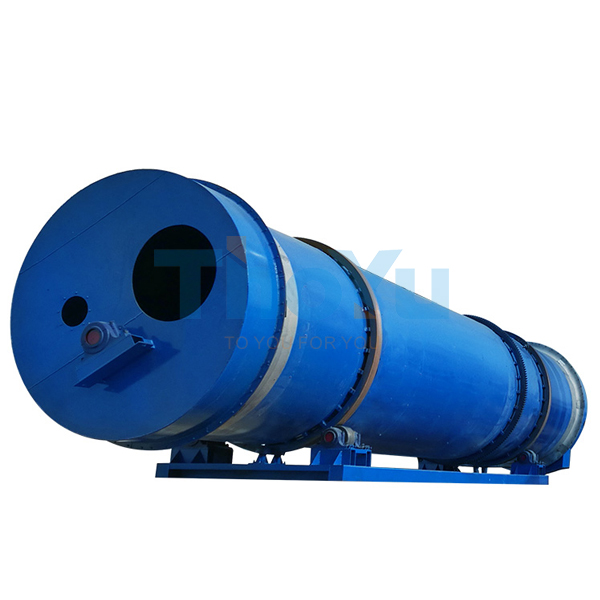
Automated airflow drying equipment maintenance checklist and energy efficiency tips
Name *
Email *
Message*

Recommended Products

Popular articles
Recommended Reading

Related Reading

Contact us
Contact us
https://shmuker.oss-cn-hangzhou.aliyuncs.com/tmp/temporary/60ec5bd7f8d5a86c84ef79f2/60ec5bdcf8d5a86c84ef7a9a/thumb-prev.png